Education
JRS’s priority for 2025–2029 is to advance access to quality education of forcibly displaced people by upholding the right to recognition in national education systems, and prioritising teacher formation and alternative education pathways, especially for girls and other marginalised groups.
Displaced young people often struggle to continue their education and to pursue opportunities that prepare them for the future. Yet for people living in displacement, education is not only a basic right but also a vital form of protection. It keeps children safer by reducing risks such as child labour, forced marriage, early pregnancy and recruitment by armed groups, and helps connect those who need extra help with specialist services.
School provides structure, routine and a sense of normal life, supporting children’s emotional wellbeing and ability to learn. Education helps children, young people and adults rebuild confidence, develop problem-solving and life skills, and learn how to manage relationships and emotions. It promotes equality between girls and boys, includes learners who might otherwise be excluded, and opens doors to jobs, further study and civic participation. When displaced and host communities study together, the next generation is better prepared for peace, rebuilding and integration.
JRS’s approach
Building on a long Jesuit tradition, JRS’s education activities are based on cura personalis: the care for the whole person. Our goal is to create safe, welcoming schools where children can learn, play and grow, while also supporting the families, teachers and communities around them.
JRS prioritises the inclusion of refugees in national education systems so they can learn and grow alongside local children and young people.
Teachers are at the heart of our work. JRS offers ongoing training and support to teachers so that they can improve the way they teach in the classroom, protect children, and respond with care to students who have lived through crisis and loss. Lessons include not only academic subjects but also practical life skills and simple tools to help children deal with stress, build healthy relationships and resolve conflict peacefully.
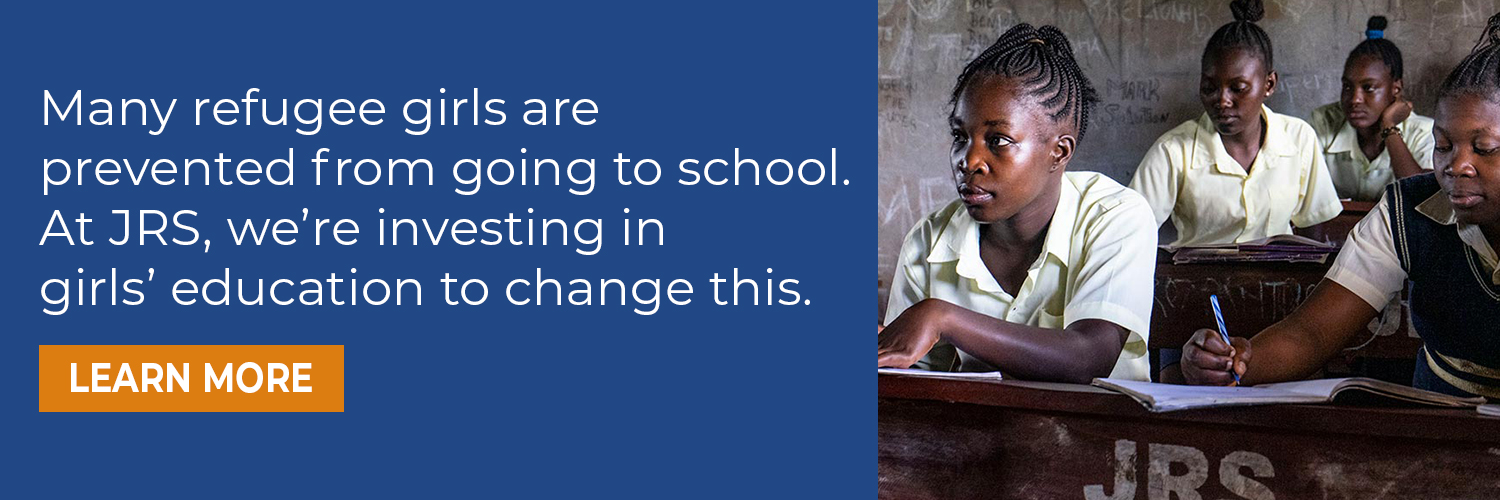
Our approach pays special attention to learners who are most at risk of being left behind, including girls, children with disabilities and other marginalised groups. We offer flexible learning options for those who have missed years of school, such as catch-up classes or accelerated programmes. We work closely with parents and caregivers so they can support children’s learning and help keep them in school.
JRS coordinates closely with education and refugee coordination groups at local and global levels, and works with partners such as the Geneva Global Hub for Education in Emergencies and the Global Education Cluster. Our education programmes are aligned to the INEE Minimum Standards.
What we do
JRS provides learning opportunities for refugees from early childhood through primary and secondary school, as well as higher education, alternative learning programmes and life skills courses.
Across countries, this work takes different forms. For example:
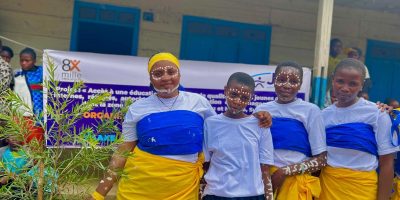
- In Colombia, JRS promotes safe schools in Buenaventura, an area deeply affected by violence. We work with children and teachers to build safer school environments, prevent risks linked to violence and drop-out, and strengthen education as a key form of protection.
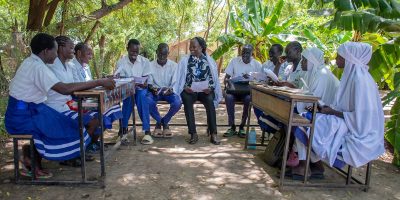
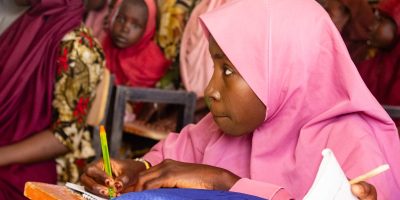
- In Kakuma camp, Kenya, JRS supports adolescent girls and boys to access secondary education by tackling barriers such as poverty, gender-based violence and security concerns. This gives young people a better chance to learn and shape their own future.
- In Lebanon, to respond to the shortage of qualified teachers in areas hit by long-term crisis, JRS partners with Saint Joseph University in Beirut. Together, we train future education leaders and offer an accredited diploma, strengthening local schools and building lasting change in communities.
Programme Stories
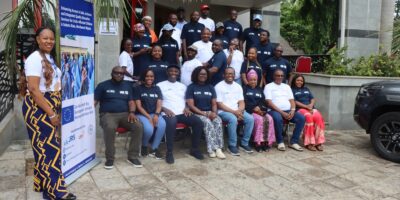
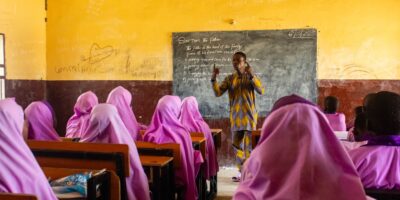
JRS, CBM and HCOMDI launch European Union-supported project to strengthen education in north-west Nigeria
05 August 2026

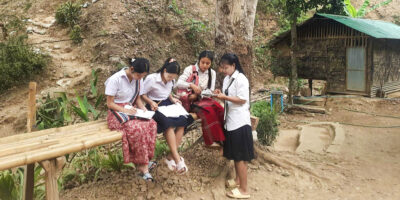
Accompaniment as the heart of education in displacement
31 March 2026
GIAN Right To Education International Webinar
21 February 2026

“Children should hold pencils, not knives”
10 February 2026
Refugee students inspire change in Kakuma Refugee Camp
22 January 2026