Sustaining learning in times of crisis: voices from Academia and humanitarian organisations
05 November 2026
In the context of protracted crises, displacement, conflict, and insecurity, schools operate under immense pressure, with limited resources and rapidly evolving needs. These challenges affect communities around the world, and no single institution can respond to them alone.
This is where partnerships between universities and humanitarian organisations can make a real difference. By bringing together academic knowledge, field experience and the perspectives of local communities, they can help ensure continuity of learning.
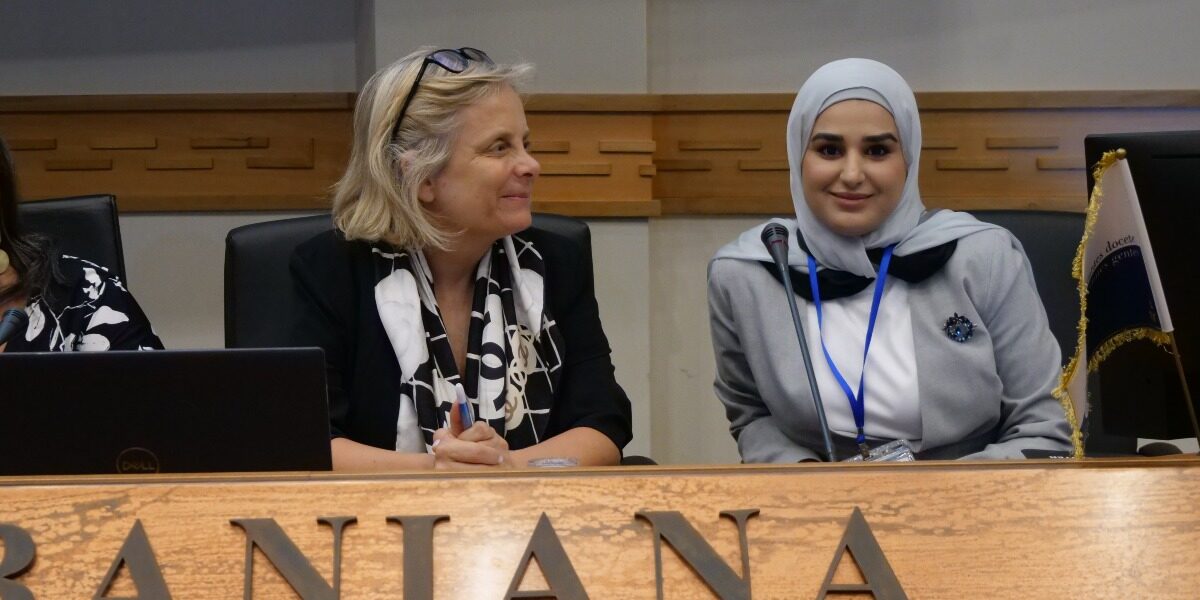
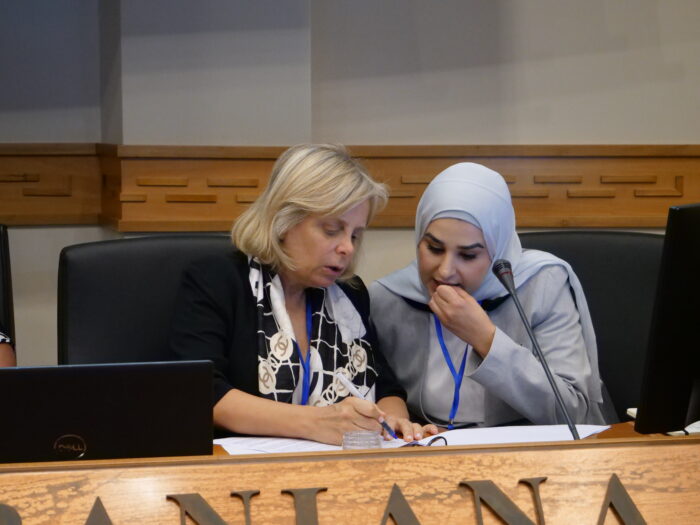
The long-standing partnership between Saint Joseph University of Beirut (USJ) and JRS is one such example. Professor Patricia Rached, Dean of the Faculty of Education at Saint Joseph University of Beirut and Batoul Moussa, Education Specialist at JRS, reflect on the impact this partnership has had on education initiatives across Lebanon, Syria and Iraq in post-crisis and transitional settings.
Note: Both interviews have been edited and condensed for clarity.
Can you tell us more about the local context where you work?
Patricia: I work mainly in Lebanon, in a region that has been facing successive, interconnected and long-lasting crises for many years: severe economic and political instability, population displacement, conflicts and wars, and widespread insecurity. Schools and educational organisations are working under enormous pressure. Resources are limited, needs change very quickly, and educators themselves are affected by the same uncertainty as the people they support.
Batoul: Much of my work has been in the Middle East. In my context, a child may drop out of school because circumstances around them make it difficult to continue their education, such as family responsibilities, relocation, protection concerns and psychosocial distress. A child may also be enrolled in school and still struggle to attend regularly or learn effectively. This context asks us to look beyond access to education alone. We have to ask whether children feel safe, whether they are learning, and whether the people supporting them have what they need to continue.
What are the main challenges facing your organisation and the communities you support?
Patricia: For refugees, displaced families and vulnerable communities, the greatest challenge is uncertainty. It is very difficult to live without knowing what tomorrow will look like. This affects education, family life and work, but also the ability to imagine a future.
In our work as a university, one of our biggest challenges is to remain flexible while staying firm on our educational standards. As a university, we define objectives, programmes and timelines. Yet in crisis situations, what seems possible one week may no longer be possible the next. We have therefore learned to listen more carefully, adapt continuously and, at times, change the way we work.
Batoul: The challenges are interconnected. Families may be worried about income, housing and safety while also trying to keep their children in school, which can gradually make education less of a priority. Other patterns may then emerge, such as early marriage or entry into the workforce. Children may have missed months or even years of learning because of displacement or may struggle to concentrate because of what they have experienced.
In my work, I try to respond to urgent needs while also building something that can last. We need to find innovative ways to respond to changing realities while maintaining continuity and a longer-term vision for education.
Can you tell us about a particularly transformative encounter or experience that continues to inspire you in your work?
Patricia: What inspires me most is seeing what people become over time. Some people first came to our programmes as participants and later became able to support and accompany their own colleagues. For me, this is what transformation means: when someone is no longer simply receiving support, but becomes able, in turn, to support others and contribute to change.
Batoul: What stays with me is conversations with teachers. They begin by describing everything that makes their work difficult. Then, as we listen and think together, they start describing what they have already tried, what their students need, and what they want to do next. Those encounters continue to shape what inspires me at work: beginning by listening and then building from the knowledge people already hold.
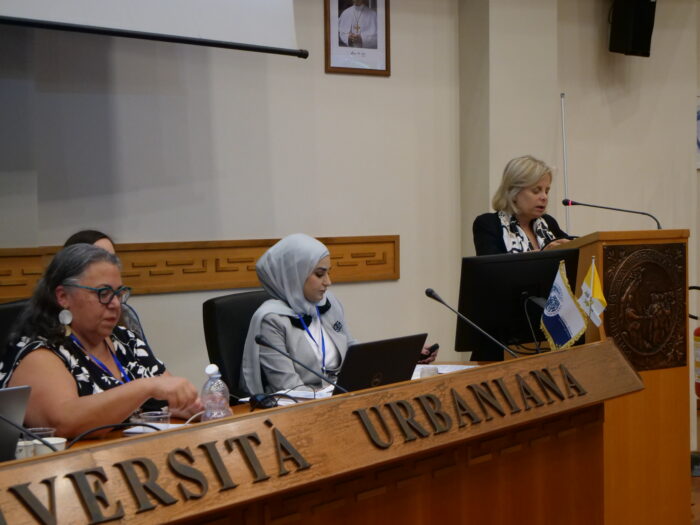
Ten years of collaboration between a Jesuit university and JRS: how has this partnership responded to the needs of the people we serve?
Patricia: Over the years, I believe our partnership has gradually evolved from simply providing training to strengthening people’s capacity to act. In Lebanon, we worked with school leaders on their own school development projects. In Erbil, some participants who had completed our programmes later went on to support their peers. And with Syrian educators, we had to develop a much more flexible form of accompaniment because the situation was constantly changing.
What makes a partnership sustainable is when people become able to continue, adapt and support others, even after a particular programme has come to an end.
Batoul: Together, the University and JRS have successfully connected academic knowledge with the realities of education in crisis contexts, including through an accredited programme designed for education practitioners and future leaders in the field.
Its impact extends well beyond the attainment of an individual qualification. When a teacher or educational leader grows in confidence and develops new skills, this can positively influence an entire team and, in turn, improve the educational experience of children.
Explore more