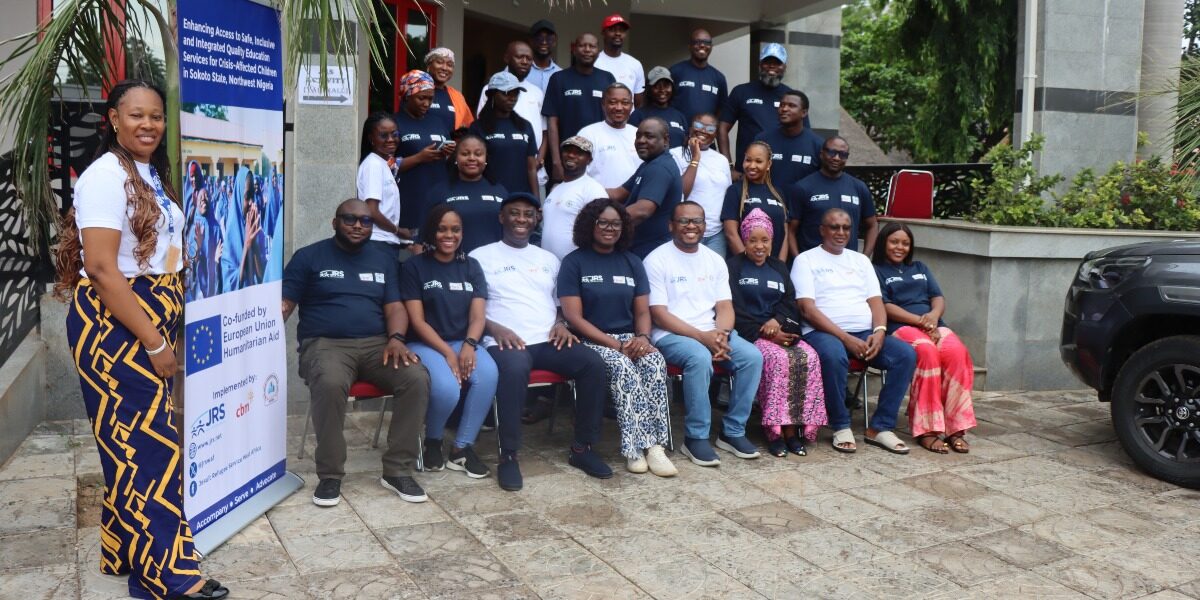

The Jesuit Refugee Service (JRS), in consortium with Christian Blind Mission (CBM) and Hikima Community Mobilization and Development Initiative (HCOMDI), has launched a new project co-funded by the European Union and aimed at improving access to safe, inclusive and quality education for crisis-affected children in Sokoto State, north-west Nigeria.
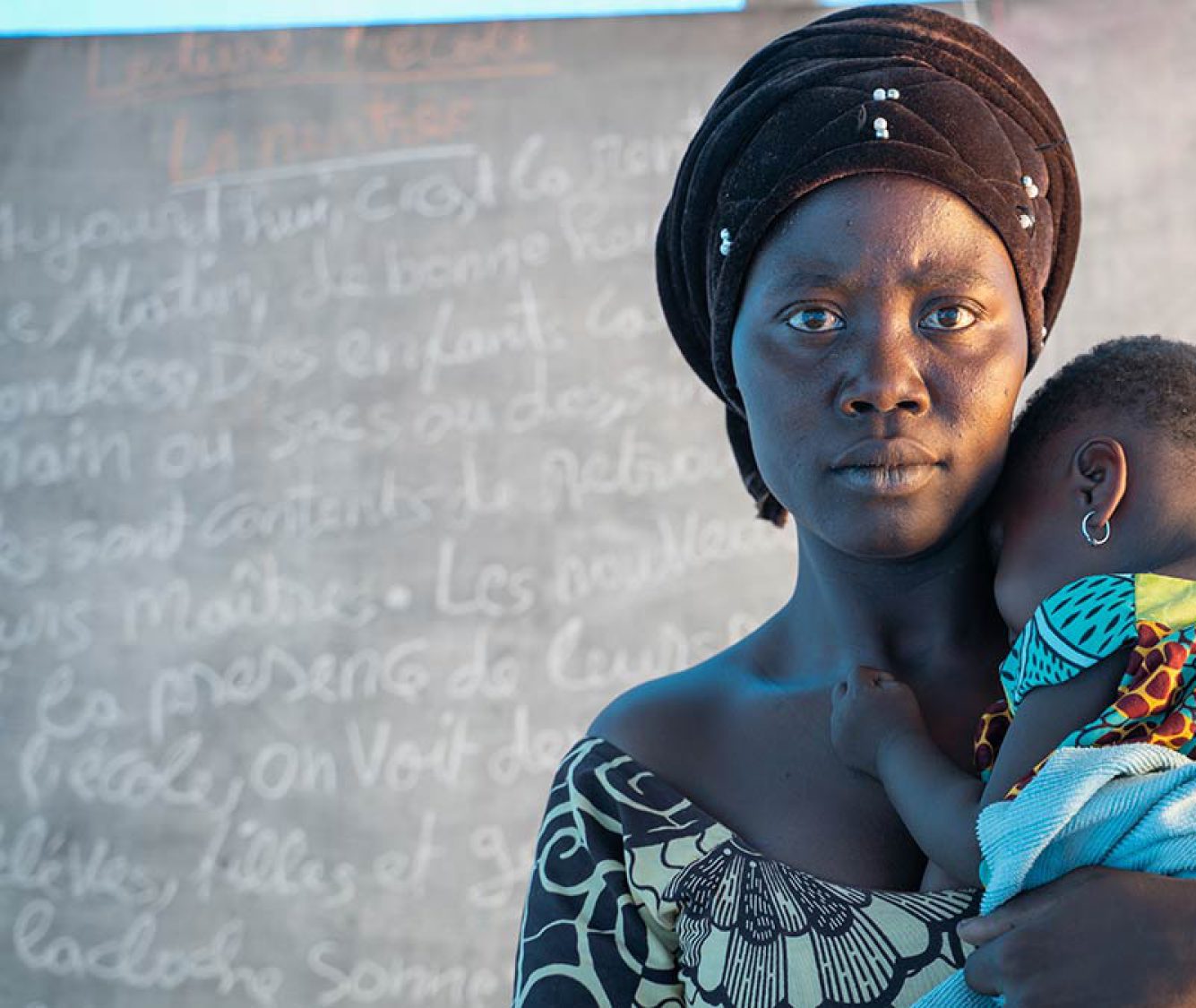
For many families across the region, years of instability and insecurity have severely disrupted children’s education and limited their future opportunities. While some have never attended school, others have been forced to drop out due to poverty, displacement, insecurity, or a lack of accessible learning facilities.
“North-west Nigeria, and Sokoto State in particular, carries a weight the humanitarian community has been a little slow in coming to see. In Sabon Birni, Isa and Kware, we found children who have been out of school for years, classrooms that have collapsed rather than merely deteriorated, and girls and boys kept home not because they lack the desire to learn, but because there is no latrine, no safe route to school, and no functioning borehole or reliable water source,” Fr Temple Anuforo SJ, JRS Nigeria Country Director.
Through this partnership, JRS, CBM and HCOMDI aim to address these challenges and ensure that every child has the opportunity to learn, participate and thrive.
The two-year project will be implemented in the Local Government Areas of Kware, Sabon Birni and Isa, reaching an estimated 25,000 children and community members, the 60 percent of whom are girls. The intervention will help more than 9,000 out-of-school children return to learning, prioritising internally displaced children and those from returnee and host communities, with particular attention to Almajiri children and children with disabilities.
“We are proud that this EU-supported project in Sokoto State has placed inclusion at the heart of its approach. Through assistive devices, inclusive teaching practices, and community engagement, we will help ensure that children with disabilities and other vulnerable learners can access safe, quality, and equitable education alongside their peers. We believe that every child has the right to reach their full potential, regardless of disability, gender, or displacement circumstance,” Samuel Omoi, Country Director, Christian Blind Mission (CBM)
By improving school infrastructure and Water, Sanitation and Hygiene (WASH) facilities, the project will help create learning environments that are safe, inclusive and accessible to all. Teachers will also receive training and support to better respond to the needs of learners who have experienced displacement, distress, and prolonged interruptions to their education. Beyond the classroom, the project will strengthen the capacity of School-Based Management Committees (SBMCs) to improve school governance, encourage community participation, and reinforce child protection mechanisms.
“At HCOMDI, we recognise that education is not only a fundamental right but also a critical pathway to protection, empowerment, and sustainable development. Through this important partnership with CBM and JRS, and the generous support of the European Union, we have an opportunity to help restore access to safe, quality, and inclusive learning for some of the most vulnerable children in these communities,” Ubaida Bello Muh’d, Executive Director of HCOMDI.
Working closely with the Sokoto State Government, education authorities, school communities and local stakeholders, the partners will contribute to building sustainable education systems that provide children with the opportunity to learn, recover, and thrive.
Explore more