Reconciliation

JRS’s priority for 2025–2029 is contribute to the transformation of relationships between individuals and groups who have been damaged by violence and conflict at communal, cultural, and structural levels, facilitating safe spaces to seek nonviolence, justice, and peace.
Forced displacement is often rooted in violence, exclusion and injustice, which deepen divisions between people and communities. Many refugees flee armed conflict, persecution, poverty or discrimination, only to face hostility, xenophobia and marginalisation in the places where they seek safety.
Reconciliation is therefore essential. It means working intentionally with refugees, host communities and local partners to heal wounds, rebuild trust, address tensions fairly, and create inclusive communities where people from different backgrounds can live together peacefully.
JRS’s approach
Driven by the need for integration and social cohesion, JRS makes reconciliation a core part of its programmes. By strengthening the capacity of JRS teams, refugees and host communities to resolve conflict and address the causes of discrimination and violence, we work together to transform relationships and restore right relationships.
As a faith-based organisation, we recognise the important role that religious belief can play in giving people and communities a strong foundation for resilience and reconciliation.
JRS approaches reconciliation by first listening carefully to people’s experiences and understanding the tensions that affect their daily lives. We look at what is driving conflict, but also at what can build peace. This helps us make sure our work reduces tension rather than adding to it, and strengthens the relationships that make peaceful community life possible.
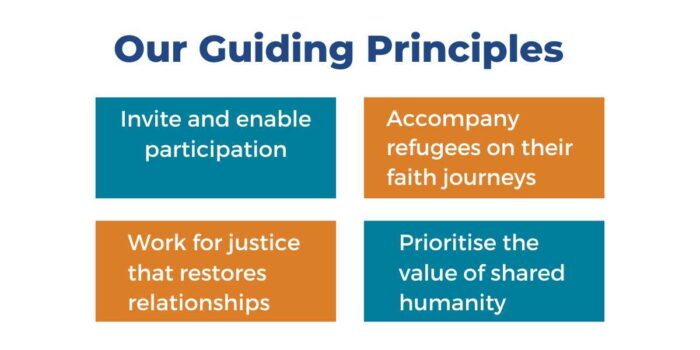
Our approach is guided by a few simple principles:
- We work to build just and compassionate relationships.
- We place shared humanity above the differences that can divide people.
- We encourage participation, especially from those whose voices are often unheard.
- We support forms of justice that repair relationships and help prevent further harm.
- We recognise that reconciliation is both a personal and a collective journey, calling for honesty, healing and accompaniment.
JRS works on reconciliation at different levels, because division and healing happen in many places at once. Sometimes the work begins with the individual, helping a person reflect on their own story and begin to heal. Sometimes it involves strengthening trust and teamwork within JRS teams. Often it means bringing together divided groups in a community through dialogue, shared activities and safe spaces to meet. In other situations, it means challenging harmful narratives, discrimination and unjust structures that keep violence and exclusion in place.
What we do
JRS works for reconciliation in many different ways, depending on the context, but always with the aim of building social cohesion, reducing tensions and helping people live together in more just and peaceful relationships.
We support dialogue and trust-building between refugees and host communities, and among groups that may be divided by conflict, identity or past harm. We create welcoming spaces where people can share stories, listen to one another and rebuild relationships over time.
We strengthen the capacity of communities to lead reconciliation processes themselves. This includes training community leaders, teachers, young people, women’s groups, faith leaders and local partners so they can help prevent conflict, respond to tensions and promote inclusion.
We work through education, youth engagement and community activities to build bridges across difference. These shared spaces can help reduce fear, challenge stereotypes and encourage cooperation around common goals.
We also support reconciliation within our own teams, especially when staff members come from communities affected by the same conflicts. This helps build trust, encourage reflective practice and strengthen our ability to serve others well.
Across all of this work, JRS seeks to address not only broken relationships but also the wider attitudes, systems and injustices that keep people apart. Our goal is for JRS teams and communities affected by forced displacement to experience stronger collaboration, deeper connectedness, fewer tensions, and more just and peaceful relationships through dialogue, healing, storytelling, participation and shared action.
Programme Stories
Peace through reconciliation: another part of the JRS mission
17 February 2026
Voices from Across the Globe: A unified call for social justice
20 February 2025
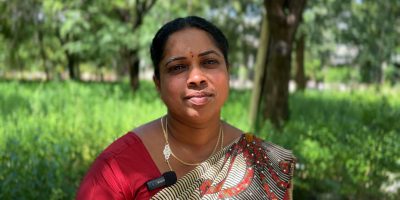
Selva builds peaceful relationships between refugees and host community in Tamil Nadu
09 January 2024

Chantal accompanies Medhi as he seeks asylum in France
19 December 2023