Helping displaced people is a form of resistance against dehumanisation
22 May 2026|Alejandra Castellanos, Director of JRS Latin America and the Caribbean
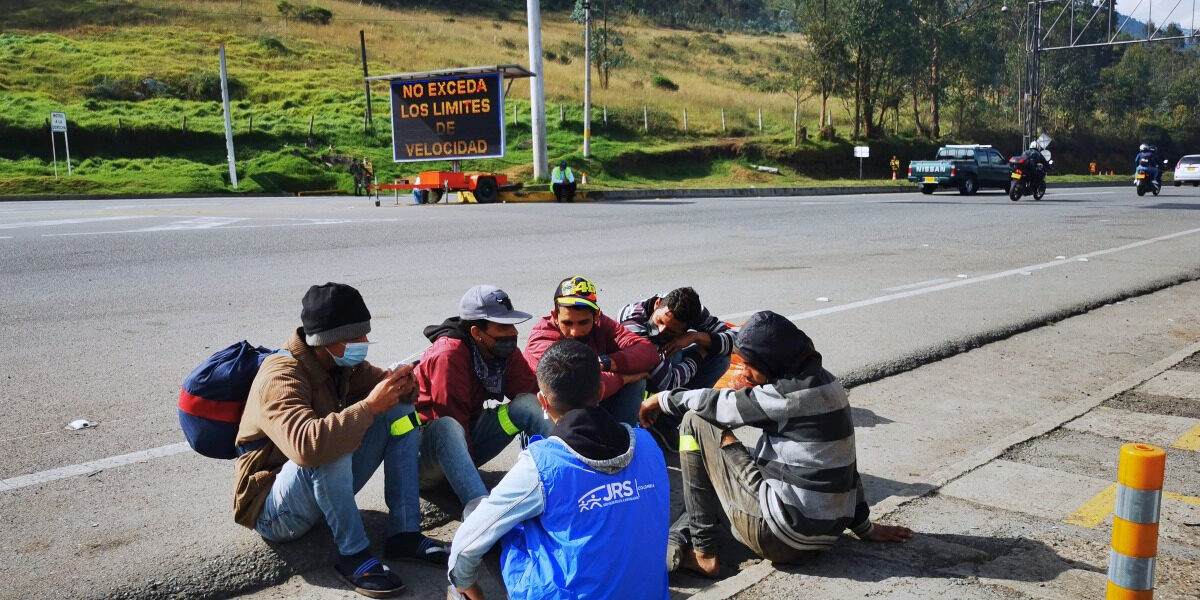
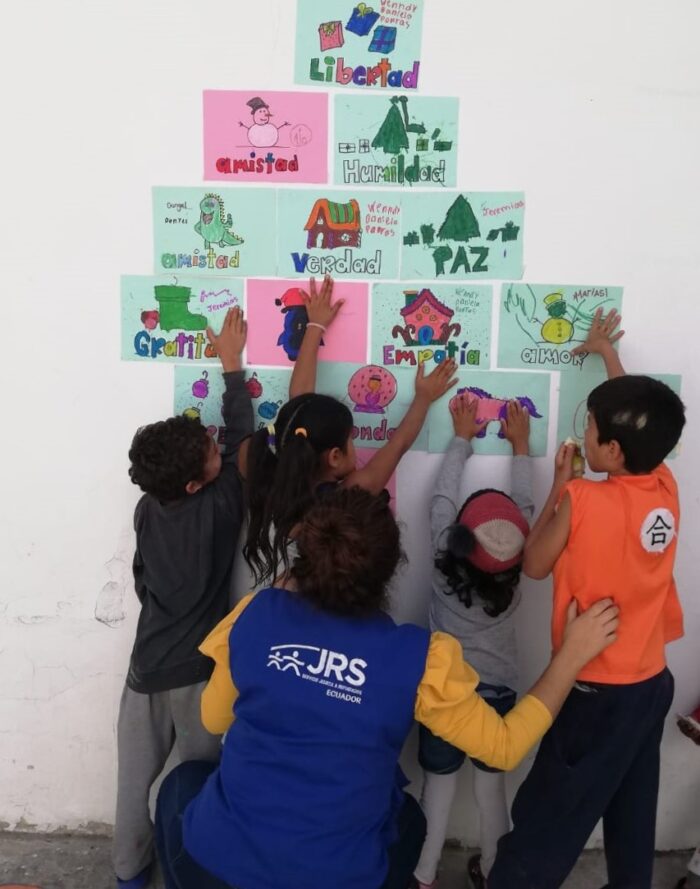
I recently visited La Argelia, a Jesuit Refugee Service (JRS) shelter located in a cold, foggy neighbourhood in Quito, Ecuador. The shelter welcomes about ten families at a time. Here, internally displaced Ecuadorians, Venezuelan families who have crossed two or three countries, and Colombians fleeing armed conflict come together.
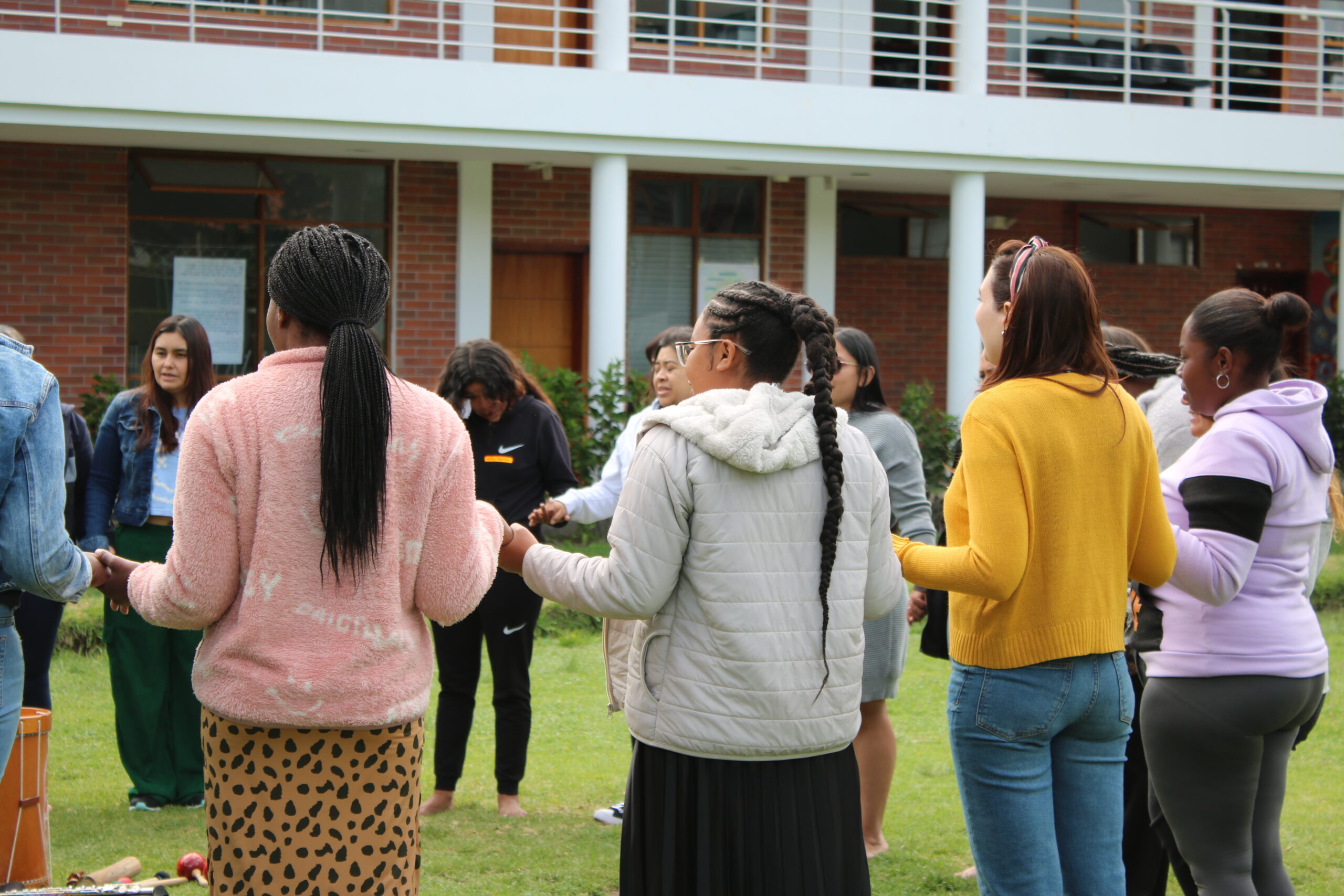
Most arrive with a mission to find work. They soon realise that managing their emotions is an important part of settling into a community.. La Argelia’s therapeutic model combines individual processes, group sessions and community support with a three-month sustainability plan. This is what the residents value most, setting this house apart from other spaces they have lived in on their journey. A common sentiment they express is that here they have understood that therapy is not a luxury but a necessity for continuing to live.
“In other shelters, they told us: go out and fend for yourselves. Here, they teach us to understand what we feel,” said Camilo, an Indigenous Misak man who fled Cauca. He said that hedid not know what it meant to “be a migrant” until he arrived in Ecuador. “That was my first name.”
Nelson, an Afro-Colombian from Buenaventura, fought back tears as he recounted experiences of racism on public transport. Some people refused to sit next to him and others spatat him. “You understand that it’s not personal, that it’s structural. But it still hurts.” But he acknowledged that the power of talking about it with a trusted group means that he need not bear the burden of that violence alone. A woman named Natalia, who now lives in the neighbourhood, says that integration is difficult, but worthwhile. “Now people call me ‘neighbour,’ and there isn’t as much mistrust.”
Ingrid, a Venezuelan woman from Zulia, told me how her children were born along her migration route in Colombia and Peru. “My first goal was to work, but here I learned that if I don’t understand what I’m feeling, I can’t move forward,” she said. For many families, home is more than just a shelter; it is the first place where they can express their fears and losses, as well as their desire to move forward. Several told me this: “Here, psychology is not the end, but the means to live better.”
The challenges these families face are embedded in an unprecedented regional context. In Colombia, forced displacement increased by 61% in 2025 compared to 2024, and more than 1.5 million people were affected by armed violence, according to a report by the European Civil Protection and Humanitarian Aid Operations. JRS prioritises protection, livelihoods, education, psychosocial care services, and reconciliation, especially in border areas and rural territories.
In Mexico, the militarisation of the country and the 1.2 million immigration detentions recorded in 2024 revealed that it is no longer just a transit point but has become an imposed destination and a place of prolonged waiting. According to monitoring by JRS Mexico, 73.6% of migrants feel unsafe, 60% show symptoms of depression or toxic stress, 34% have experienced violence at the hands of state agents, and 16% have been subjected to kidnapping or extortion. JRS Mexico therefore continues to provide protection, mental health support, and legal aid in an environment where more than 100 shelters have closed due to a lack of funding.
In Ecuador, the increase in internal displacement, coupled with tougher migration policies that criminalise and render migrants invisible, has led JRS Ecuador to strengthen its work in the areas of comprehensive care, gender, and community protection.
In Venezuela, the number of returns exceeded the number of departures in 2025. I met Vanessa, a 28-year-old woman who returned to Venezuela after experiencing xenophobia and emotional exhaustion abroad for many years. With the support of JRS, she was able to grow her jewelry business. “It’s a nice way of saying ‘we are here with you, you can do it,’” she said. Her business is one of 65 that received support from JRS in 2025 to early 2026.
These voices shed light on why JRS Latin America and the Caribbean continues to provide support, even in an increasingly restrictive environment with fewer resources. Every migration route involves painful decisions, and violence, poverty, discrimination, and closed borders affect real people. Displaced families have the right to heal, to work, to learn, to protect themselves, and to dream of a possible future.
Accompanying is also a form of resistance against dehumanisation.
*This article was originally published by Canadian Jesuits International.
Explore more