What Ceuta tells us about the society we are building
23 September 2026
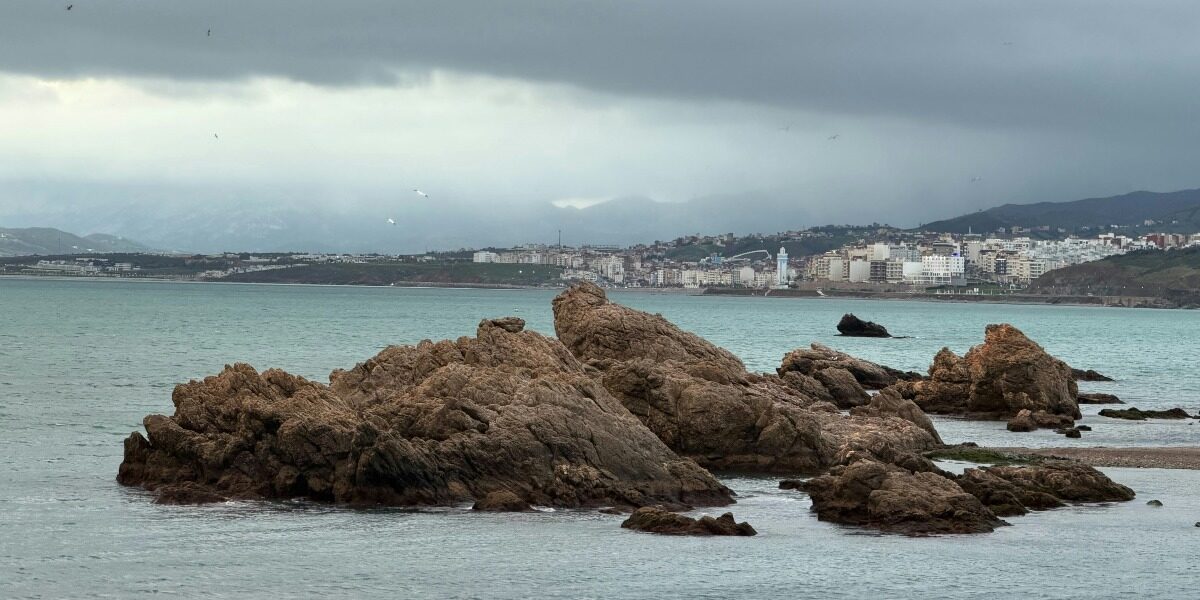
At the end of July, thousands of people crossed the border from Morocco to Ceuta, one of Spain’s two enclaves on the north African coast, in search of a dignified life. Dozens lost their lives in the attempt.
While Ceuta and Melilla have witnessed recurring border crossing attempts for years, analysts note that a movement on this scale occurred outside the usual migration patterns and would have been difficult without some reduction of controls, given the high level of cooperation that normally exists between the two countries. Second, some media outlets and political actors exploited the situation to foster anti-immigration rhetoric, not only in Spain but also globally. For example, political efforts to link the increase in arrivals to Spain’s regularisation programme, which concluded on 30 June, reflected attempts to generate fear around migration policies that move beyond approaches centred solely on containment and deportation.
This instrumentalisation, combined with the lack of a humanitarian response and the suspension of migration and asylum procedures, has fuelled a crisis of social cohesion in Ceuta and reinforced anti-migrant narratives.
Despite the scale of the event, the vast majority of those who crossed into Ceuta returned to Morocco within the following hours or days. Those who remained in Ceuta have been living in a state of humanitarian emergency. They lack access to basic needs, including adequate shelter, water, food, sanitation facilities, and essential healthcare. Women and girls face heightened risks of harassment, abuse, and other forms of violence.
The Director of JRS Europe reflects on the crisis in Ceuta
Reflecting on the events, Alberto Ares, Director of JRS Europe, argued that “What happened in Ceuta was not an “accident” or a purely spontaneous event. It was, above all, the consequence of the instrumentalisation of migration as a geopolitical bargaining chip.” He continues, “to this must be added the role of social media and certain political actors in creating and exporting a narrative of “migratory chaos” and “civilisational threat.” Fears are stoked, the debate is polarised, the complex is simplified. And meanwhile, at the heart of it all, there is the pain of concrete families, people with names and surnames, and a city, Ceuta, that lives on the front line the reality of a border that separates two radically unequal worlds. A city living through an extreme situation.”
Referring to Pope Francis and Pope Leo XIV, the Director of JRS Europe highlighted the four verbs that they have repeatedly emphasised: welcome, protect, promote and integrate. “These are not empty words: they are a political, ethical and spiritual programme. What is in crisis is not only migration management: it is a crisis of values, of compassion and of conscience.” He concluded, “we cannot normalise suffering or surrender to fear. Ceuta challenges us: it asks us not to forget that, behind every figure, there is a story; behind every border, there is a person; and behind every policy, there is a decision about what kind of humanity we want to build.”
A crisis beyond Ceuta
The crisis in Ceuta has implications that extend far beyond the territory itself and are closely linked to broader dynamics of migration and protection. It is not an isolated event, but rather the result of global decisions to adopt increasingly restrictive migration policies and to build unequal and exclusionary societies in which refugees and forcibly displaced people are met with hostility or indifference. This threatens the dignity and rights of all.
Explore more