Placing human dignity at the centre of refugee protection
20 November 2026
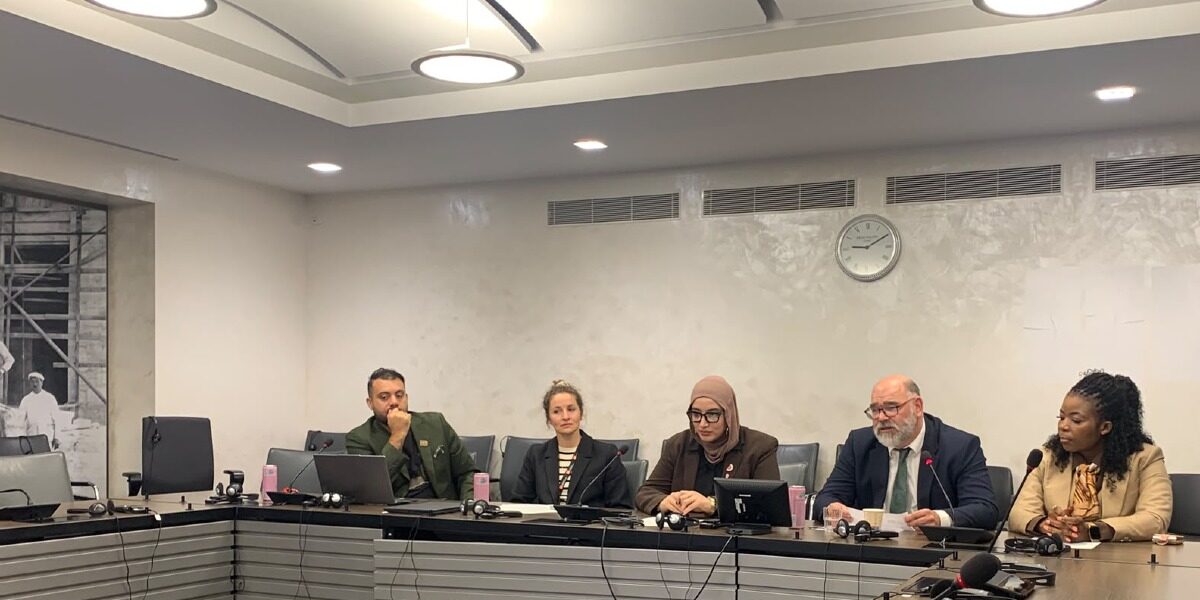
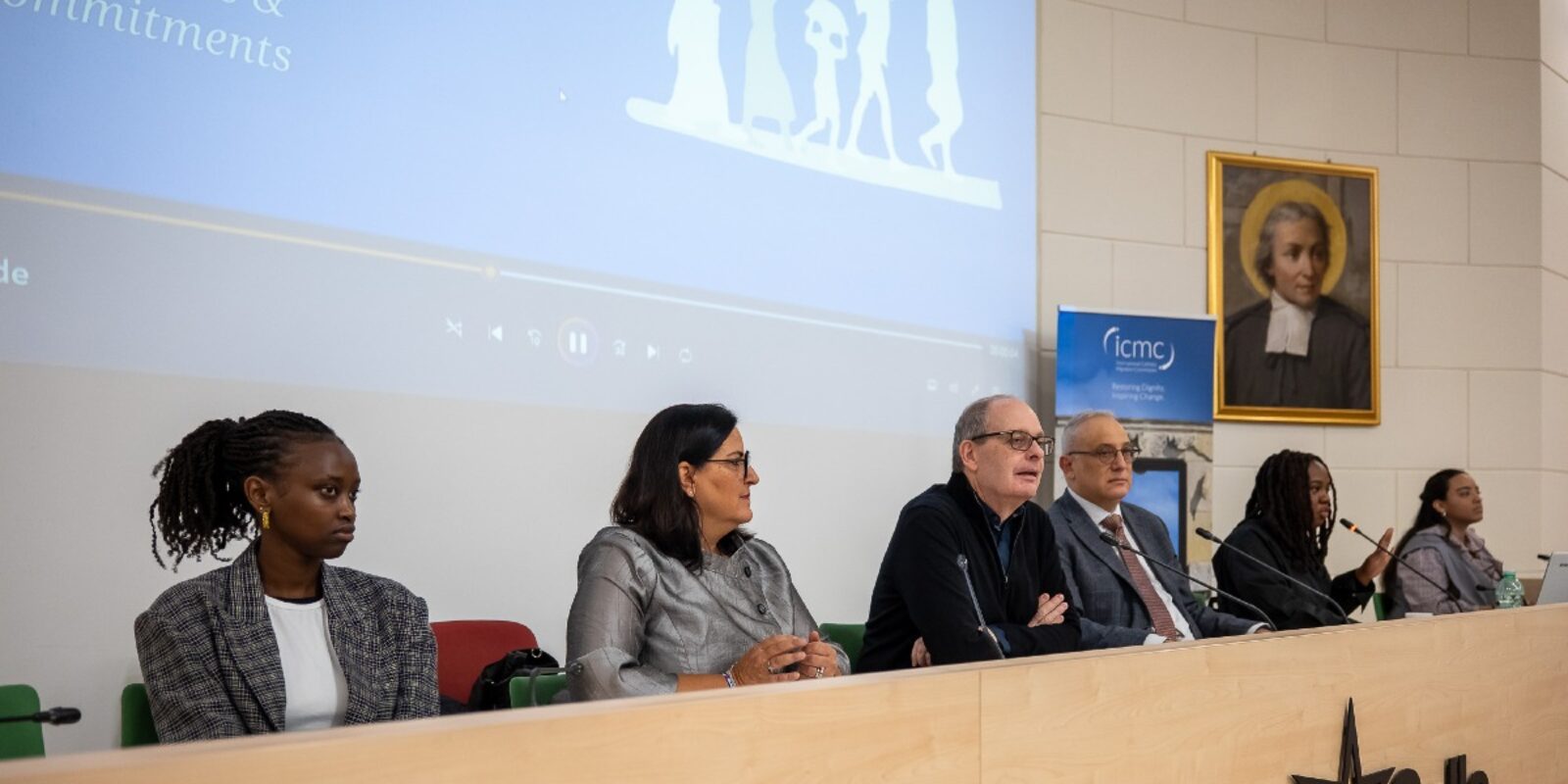
Every year, the Executive Committee of the High Commissioner’s Programme (ExCom) serves as the main forum of dialogue between UNHCR, Member States, and partners working to uphold refugee protection around the world. As part of this year’s ExCom, Eugene Quinn, Country Director of JRS Ireland, spoke at the official side event “Protecting the Promise: Evidence, Narratives, and the Future of Refugee Protection.”
The event has provided an opportunity to reflect on the enduring relevance of the 1951 Refugee Convention and to share JRS’s experience in accompanying refugees and asylum seekers, in Ireland and across Europe, promoting approaches that place human dignity at the centre of protection systems and challenging harmful narratives around forced migration.
Below is the full speech:
“75 years later we must ensure the human person remains at core of the Refugee Convention. In the words of Waleed seeking to access protection in Europe, we need to listen to the voice of experience. “I wouldn’t leave my country if I were not desperate. But I didn’t feel safe. I was about to lose my life. You need to listen and hear that voice”.
JRS’s mission is to accompany, advocate and serve the cause of refugees and forcibly displaced persons worldwide. The values that inform JRS’s work – dignity, solidarity, justice, hospitality and hope – also underpin the 1951 Refugee Convention. In JRS Ireland in 2025 we had the honour of walking with and assisting 6,400 individuals seeking protection. Their voices of experience teach us behind the labels, legal categories and classifications are people, each with a name, a face and a human story of displacement.
Numbers increasingly are at the heart of refugee protection systems. Since 2022, Ireland has welcomed over 125,000 Ukrainians and 60,000 people seeking protection. There are 32,000 asylum seekers, including 10,000 children, residing in reception centres. The State argues too many people are seeking international protection. Yet behind each of these numbers are men, women and children with names and faces. Each with an individual story like Amina “I cried for 24 hours, every day…I have no mother and no father. I am alone.”
The lived reality from applicant’ perspective over the last four years has been a sustained deterioration in living conditions, the worst witnessed in JRS Ireland’s 20-year history. International protection applicants sleeping on floors and chairs, families of five residing in one bedroom, people separated by flimsy dividers on open plan office floors in repurposed commercial buildings and men huddled in State provided tents.
One JRS beneficiary in a tent described “wearing all the clothes I have to stay warm at night” and another of using flattened cardboard boxes as a mattress when sleeping on rock hard army cots.
Since December 2023 more than 12,000 single male protection applicants were not offered accommodation on arrival, in breach of international legal obligations. Unaccommodated asylum seekers find themselves on the streets and at risk from deprivation and violence. One vulnerable applicant simply longed for a roof over his head “Brother, all I want is to look up at night and not see the stars”. While acknowledging the unprecedented accommodation challenge experienced by the Irish State, the human perspective for many in Ireland’s reception system has been of ‘protection without dignity’.
In implementing the EU Pact, the Irish Government talks of a “firm but fair” approach. There is without doubt an emphasis on “firmness”. Stronger border controls employed, increased level deportations and more restrictive policies introduced. For example, recent legislation narrows refugees access to family reunification and citizenship.
125 days into the EU Pact, applicants are less visible and case processing is much faster. Recently, a case in the Asylum Border Procedure was reportedly fully determined in 27 days. Does this allow sufficient time to fully and fairly consider an applicant’s protection claim? Is adequate legal advice and counselling available and accessible? What about vulnerable applicants? In contrast many of the 21,000 applicants pending appeals under the pre-Pact system are experiencing significant delays waiting 2 years and more for a decision. Delays with a real human cost. “As we kill time, time kills us”.
Ireland has seen a progressive hardening in public attitudes to international protection applicants. Public trust has been undermined by the State’s failure to adequately communicate and engage with receiving communities.
Also, Ireland has not been immune to the global growth in anti-immigrant sentiment. Protests, violence and confrontation became the norm when new State accommodation centres were being opened. More than 20 arson attacks were carried out at properties associated with accommodating asylum seekers.
Misinformation on entitlements, levels of criminality, culture and identity are disseminated widely online. Inflammatory assertions fuel fears for safety in communities and heighten perceived risks from specific cohorts of asylum seekers. Vulnerable local and migrant populations are pitted against each other, in competition for social housing and other scarce resources.
The result is applicants experience greater hostility and casual racism outside of centres. Asylum seekers have found themselves dehumanised. Defined by their label as an asylum seeker first and as a person second.
There is a need to counter these narratives through direct encounter and building on Ireland’s tradition of hospitality. Ground up approaches show how hospitality can positively connect local and migrant communities.
For example, the Limerick United Against Racism campaign aims to show public leadership that all forms of racism and racist attitudes are unacceptable in the region. A community mural and a Solidarity Walk led by the Mayor of Limerick stand as visible and public acts of solidarity and hospitality with local migrant communities. Sport has an important role, one asylum seekers assisted to participate in the Great Limerick Run said, “during the race I was not a person of colour, I was not an asylum seeker, I was a runner”.
At national level, prior to recent changes the hospitality and generosity of the Irish people and State was unprecedented in welcoming 100,000+ Ukrainian BOTPs and was visible in every parish, town, community and city in Ireland. People opened their homes and hearts honouring the Irish tradition of a “céad mile fáilte”.
Regionally, JRS Europe developed an example of best practice through the establishment of Communities of Hospitality (CoH) in 10 countries, where families and religious congregations welcomed and hosted forced migrants in their homes as an alternative to State reception centres or the risk of destitution. The experience was transformative for hosts and beneficiaries alike. Direct encounter in CoH led to change in hearts, minds and perspective.
Pope Leo emphasised in his recent World Day of Migrants and Refugees message: “An urgent change of perspective is needed: the focus of the debate must shift from the mere management of migration flows to the full and immediate protection of human rights”.
On its 75th Anniversary JRS joins with this call that the human perspective – people with names and faces not just numbers – must remain at the core the Refugee Convention.”
Explore more