Peace through reconciliation: another part of the JRS mission
17 February 2026|Danielle Vella, JRS International Head of Reconciliation
Angry scars crisscrossed his back. He got them when pro-government militia illegally arrested and tortured him. The context was the Sri Lankan civil war, in the late 90s, but such stories echo pervasively through space and time. For me, what made this one remarkable were the young man’s unprompted words: “I forgive, because if I don’t, the cycle of violence will continue.”
Antonia, another Sri Lankan, witnessed the rape and murder of her daughter Aida by soldiers. Despite frustratingly futile attempts to see justice done, she says serenely: “I have no use for vengeance. Let God judge.” These encounters taught me that seeking justice is not enough, certainly not its human application. More is needed to heal the wounds of injustice.
This realisation pushed me to get involved when JRS opted to make reconciliation an intentional, integral part of its mission. During a meeting in Cambodia in 2013, we made our own the Jesuit vision of reconciliation to “establish right relationships” (GC35). We explored the experience of JRS thus far and realised that the topic naturally came into focus when accompanying refugees, who are the “product” of division and violence, which they often experience on their journeys and in host countries, too.
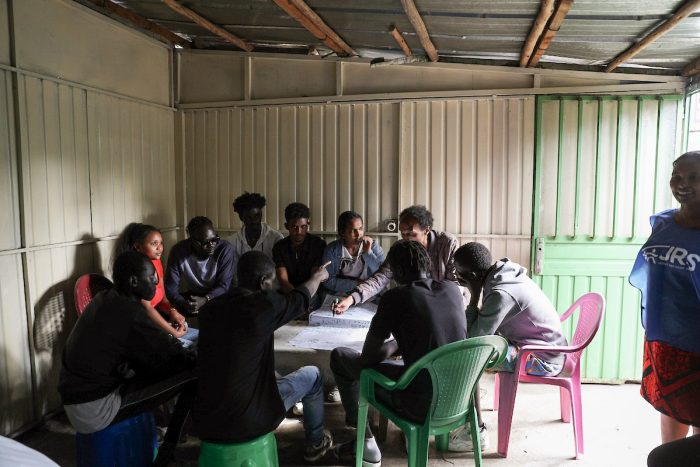
A decade later, JRS continues to journey towards the horizon of reconciliation. While differing from place to place to adapt to context, our approach has critical common ingredients. First, reconciliation starts from each one of us. Second, we build the capacity of JRS teams and community partners to foster reconciliation, including teachers and students, community and religious leaders, women’s and youth associations. Third, we facilitate safe spaces where people from divided groups may get to know and listen to one another, gradually building trust and relationship.
For example, in northern Uganda, JRS gathered a group of South Sudanese and local youth who were divided both by troubled refugee/host dynamics and by tribal histories. At first, they averted eye contact and were silent during meetings. After a year, they had grown so close that they would warn each other if intercommunal trouble was brewing.
The values of truth, mercy, justice and peace steer our actions for reconciliation around the world.
Sadly, discrimination and hostility remain pervasive. Our teams are not spared. As microcosms of their societies, they sometimes mirror prevailing tensions. “If I remember which ethnic group you come from, I won’t even be able to look at you”, said one JRS teacher to another during a reconciliation workshop. We do not ignore such tensions. Instead, we try to create spaces safe enough for them to be articulated and reconciled.
We are not short of inspiration. One bubbling source is our local reconciliation coordinators. Million was forced to flee Ethiopia’s northern region of Tigray in 2020 when war erupted. His simple advice to “give everyone the benefit of the doubt” is essential for reconciliation: don’t assume someone is bad just because they come from this or that group you have branded as your enemy.
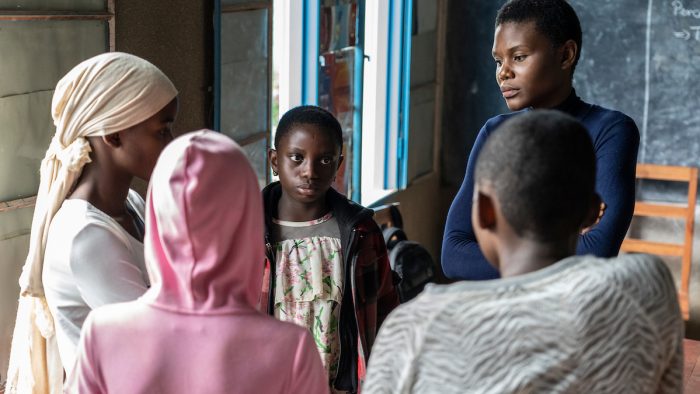
Kim was orphaned by conflict in Manipur in northeast India. She says: “I really want to tell people that forgiveness is possible and freeing. I struggled with hatred of those who killed my mother. When I understood how Jesus died for people who hated him, I knew I should do the same.”
Daniel also struggled with forgiveness. He was displaced from his hometown in Colombia where his family faced threats from both guerrillas and paramilitaries. He recalls: “At 20, I learned that my father had been forced to collaborate with the paramilitaries. This filled me with anger and disappointment. Yet, I came to understand that sometimes people have no choice. We embraced and asked for forgiveness, recognizing the complexities of our circumstances.”
Other Jesuit ministries inspire us, too. In 2023, Fr Fouad Nakhla invited me to facilitate a storytelling workshop at the Jesuit cultural centre in Jaramana, Damascus. The centre is a brilliant meeting space for people from diverse groups in Syrian society. Although they had lived through the war, the workshop participants preferred to focus on the possibilities of the safe space they had created at the centre. They found power in the shared experience of moving forward and writing the next chapter of their stories together.
There is much potential in spaces of encounter, where each one becomes an agent of transformation, making new meaning for their lives through sharing and renewing their hope. As one youth said in Jaramana: “My story is not fixed. The past is fixed but how we remember and how we tell the story can influence the future.”
*This article was originally published by the Curia Generalizia della Compagnia di Gesù (Jesuits Curia).
Explore more