“It is our duty to restore hope”
08 January 2026|Wael Hulou, JRS Staff
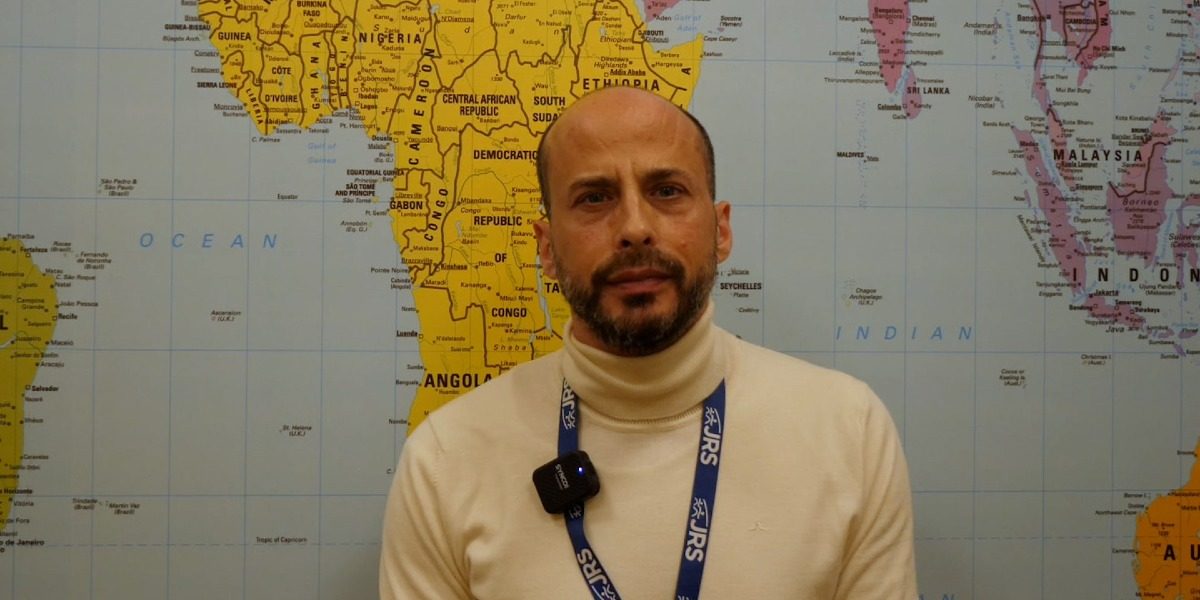
As the Jubilee Year of Hope has drawn to a close, we share the testimony of Wael, JRS staff, written on the occasion of the Jubilee of Migrants and the World Day of Migrants and Refugees, held on 4–5 October 2025.
This speech is a call to action, urging us to work together to build a more just, inclusive, and human world.
Full testimony below:
My name is Wael, I am Syrian, and Aleppo is my city. In 2013, I was granted the refugee title. My name in Arabic means “The one who seeks refuge”— a strange coincidence, considering my story and how unexpectedly my life changed at a certain point. “Nomen omen,” as the Romans say.
Hope is fundamental for human beings. It is not just a feeling, but an inner strength that helps us endure, overcome difficulties, have trust, and dream of a better future.
But today, what does hope really mean? Today, hope is no longer a human right; it is a luxury reserved for a few: a few countries, a few people, a few individuals.
In many areas of our planet, the maximum aspiration is not to live out a dream—it is simply to survive.
When people lack access to basic needs, they aspire only to have a little bread and some water. They strive for dignity, to learn to read and write, to have electricity and a safe roof under which to live and sleep in peace, without dying from cold or heat.
Having hope, in fact, often does not mean receiving justice. Offering hope to those who suffer is not enough; it is also necessary to guarantee rights and dignity.
When hundreds of children die of hunger every day under bombs, when we call the genocide a “conflict” and food deprivation a “famine,” we do so to feel less guilty, less complicit.
When those who have the courage to speak the truth are punished instead of rewarded, it means that something has been deeply broken.
When seeing people die in the rubble becomes normal for us, when violence steals hope and no longer shocks us. That is when we must stop.
That is when we must wake up. We cannot remain silent. We cannot close our eyes. We cannot turn away. It is up to us—those of us fortunate enough to live a normal life.
We have a role; we have a duty to help those who have lost hope find it again. We can be the voice of those who are not heard.
If we ask ourselves what we can do, we must remember that even small, everyday actions can make a big difference. We can choose to tell the truth—not the convenient one, but the authentic one. We can think more often of those who suffer, open our hearts instead of pointing fingers. We can stop judging and abandon prejudice.
We can fight stereotypes, which hurt and destroy lives.
Today, there are those who try to rewrite reality, those who attempt to confuse victims with oppressors. But our duty is to remain clear-headed and faithful to the truth. We have a duty to point out responsibilities: those who fuel hatred and violence, those who profit from the arms trade, those who build power and privilege on the suffering of the innocent.
I know it is not easy. But if we remain silent, if we do nothing, we must be aware that one day all of this could affect us too—and we could find ourselves on the other side. As happened to me.
As Pope Francis taught us, “we are all in the same boat, fragile and disoriented, yet at the same time important and needed, each of us called to row together, each of us in need of comforting the other.”
Before the war, I had my job in Syria; I lived well with my friends and family. Then, suddenly, everything changed, and I had to leave my comfort zone. I fled before I could be arrested.
It was not easy; sometimes I feel as if I have lived two lives, with different challenges and hopes. But today, I consider myself among the fortunate—living and having lived more than one life.
Let us, however, turn our thoughts to those who have not been as lucky, and to those who still hope. To all of them—and to us—I offer my greatest hope: that future generations may build a fairer, more inclusive, more human world.
A world where hope is accessible to every human being.
A world where no one is discriminated against for who they are.
To them and to us emerges the commitment to work for this change, which cannot wait. We are part of it; we must act and participate.
All together. Now.
Explore more