How Ethiopian youth are driving peace in the National Dialogue
23 October 2026
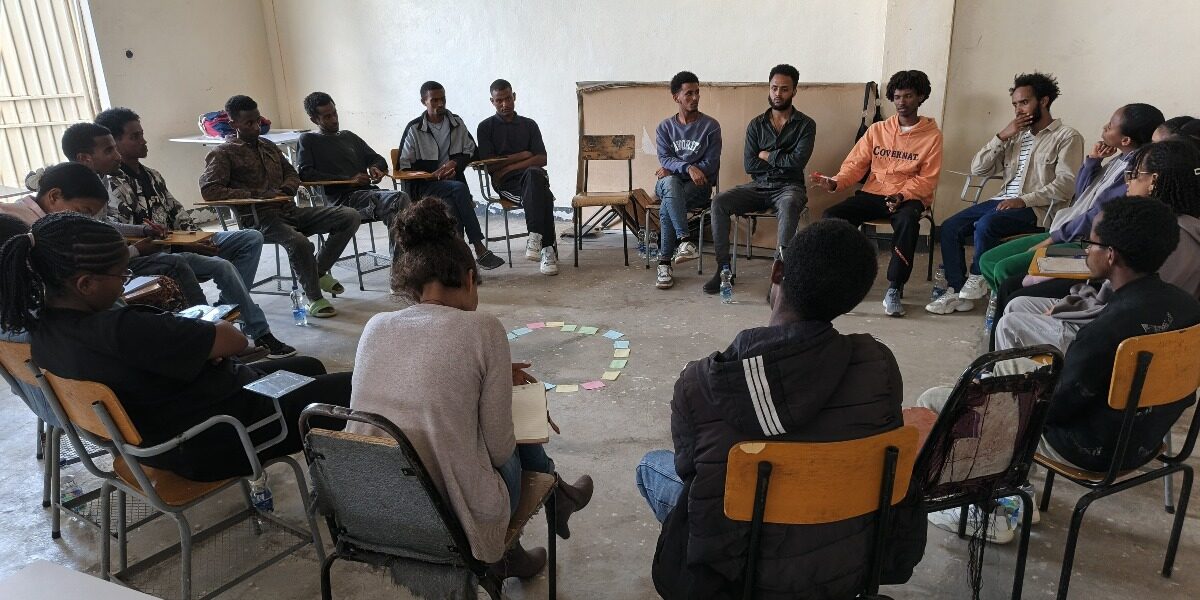
In Ethiopia, where deeply rooted identity politics and complex national dynamics affect relations between communities, a quiet yet profound change is taking shape. At universities and on digital platforms, young, women and men from different communities, ethnic groups and religious backgrounds are meeting, listening to one another and discovering that what unites them is much more than what divides them. Together, they are helping to shape their own future.
Through the Peace Artisans Project, implemented in close partnership between Jesuit Refugee Service (JRS) Ethiopia and Live for Generation (L4G), young people are playing an active role in building peace, strengthening national cohesion and fostering a democratic culture.
From universities to the National Dialogue
The university dialogue circles and digital initiatives, including the LG4 Thoughts podcast series, were created through the project as safe spaces where young people could share their perspectives on the challenges facing Ethiopian society. Over time, these conversations moved beyond university campuses and became part of the national debate.
Drawing on its organisational network, L4G secured institutional access to the conference organised by the Ethiopian National Dialogue Commission (ENDC) for young representatives involved in the project. Among them was Mekia, a young university student from Muslim community, who was given an official seat as a delegate. Her participation marked a step towards greater inclusion of young people, women and minority communities in decision-making processes.
A further 50 young volunteers helped make this national space for dialogue possible by supporting communications, media and logistics throughout the ENDC conference. In addition, a university student and an L4G dialogue facilitator were selected as official conference note-takers, a responsibility traditionally entrusted to more senior figures.
“This is meaningful youth engagement and we are so happy with this. Choosing two young people [as notetakers] was a sign of inclusion in this important process,” said Yonas Berhanu, Executive Director of L4G.
More than 3,000 voices brought together in a shared agenda
The project’s influence on the National Dialogue did not end with the participation of young delegates. The reflections, concerns and recommendations of the 3,118 young women and men involved in the project were brought together in the Youth Voices Agenda, which was subsequently submitted to the ENDC.
In this way, conversations that began in university classrooms or in front of a microphone reached national decision-makers.
The dialogue was not one-sided. Two ENDC Commissioners took part in the L4G Thoughts podcast series, engaging directly with young people’s experiences, expectations and proposals.
“The people come to our dialogues and contribute to decision-making. We believe that the voice of youth matters for change, for transformation and for sustainable developments,” said the Executive Director of L4G.
Transforming identity dynamics: breaking stereotypes and countering disinformation
The safe spaces created through the project enabled students from Amhara, Tigray, Oromia and other communities to share their stories and experiences. Through this exchange, they began to look beyond the polarising narratives and stereotypes that often shape how people perceive one another.
By listening to each other’s stories, participants recognised shared experiences, challenges and aspirations. They learnt to examine information circulating within their communities more critically, distinguish fact from propaganda and question narratives that can fuel mistrust and division.
In both online conversations and face-to-face meetings, interactions gradually shifted from hostile reactions and heated arguments towards more attentive listening, respect for different views and the building of mutual trust among young participants.
“The dialogues are helpful to heal from individual traumas. Students from conflict areas can ‘breathe out’ and share what they passed through… When youth share, it helps us understand them: ‘Oh, that’s why they act like this.’ It creates compassionate understanding that leads to reconciliation,” said Tiemti, JRS social worker.
JRS and L4G will continue working to extend these opportunities, creating safe spaces for dialogue where young people can connect across differences and play an active role in building a more peaceful and reconciled society.
This project is supported by the German Federal Foreign Office through ifa (Institut für Auslandsbeziehungen) under its ZIVIK funding programme.
Explore more