Beyond work: Why economic inclusion and self-reliance are key to refugee inclusion and dignity
01 May 2026|Fr David Holdcroft SJ, JRS Economic Inclusion Senior Specialist
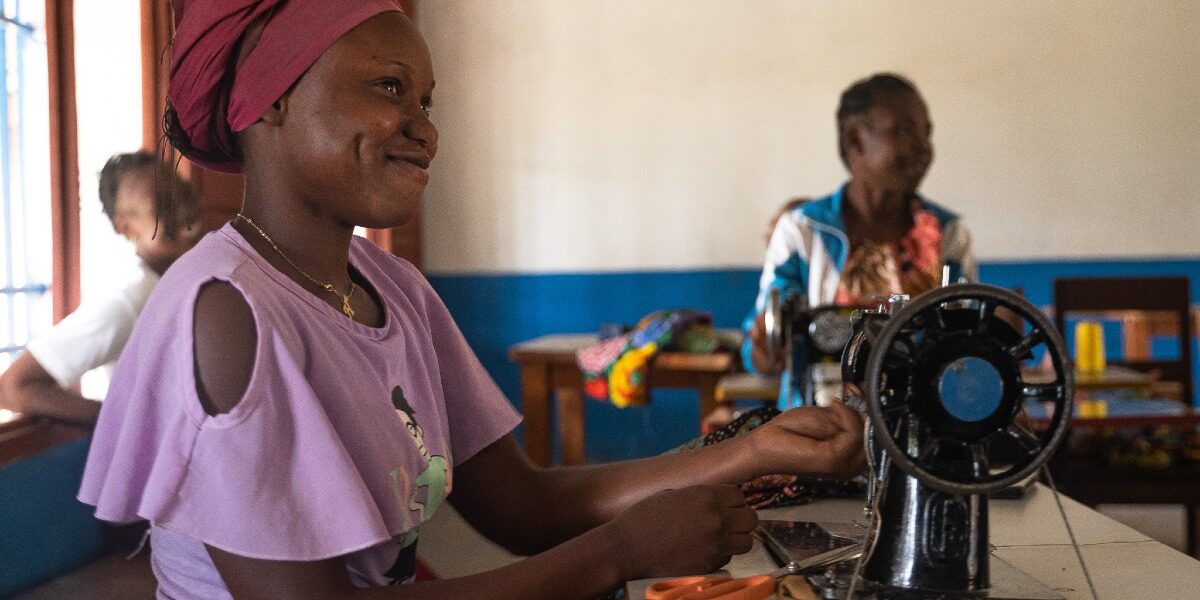
Livelihoods and economic inclusion work for refugees is much more than helping them find a job: it’s about restoring self-reliance and a person’s professional identity, while helping them being included in their new community.
The processes of negotiating a community’s goals, technical training, working with the market, and helping families stabilise their finances develop and strengthen the community and gives refugees the skills to live beyond humanitarian assistance.
The article that follows is written by Fr David Holdcroft SJ, JRS Economic Inclusion Senior Specialist. Based in Rome, he works closely with JRS teams around the world to develop and coordinate strategies that help displaced people rebuild their lives through sustainable livelihoods and economic inclusion.
The importance of economic inclusion for refugees and host community
People ask me “Why doesn’t JRS stop when people are trained in a skill and can earn money?” We know that refugees generally settle either in camps or on urban peripheries in poorer sections of the host community. Life here is tough…for everyone. So, it is up to us to assist the whole community, hosts and refugees, to move forward.
That involves us learning the market, how it functions, and to identify what barriers exist to keep refugees and poorer host community members from participating. It also involves us working with local actors and identifying where the opportunities are. This way we are creating opportunities for all and not pitting people or their communities against each other in competition for scarce jobs or businesses.
When a refugee opens a business we want to make sure they can, so we try to create an ecosystem of support, affording them access to finance, ensuring the market is there to buy the goods or services, and that they won’t attract resentful locals hungry for their own market share.
This is what we call economic inclusion but it is really social and community inclusion. And we know that it gives us lasting results in terms of a stable income for the people we assist.
Breaking the humanitarian dependency cycle: Why refugee self-reliance matters now more than ever
In the last years humanitarian funding has shrunk drastically. It is still needed particularly for the vulnerable within refugee populations. But for those of working age, it is much more important that they are earning on their own. People recover their self-respect, they connect to the community, they earn the bread they take home to their family. Some refugees expressed this to me in these terms: “it is only when you work that you really fulfil your human rights.”
Most refugees remain in their first country of asylum. JRS Economic Inclusion programmes work in 38 countries and cost an average of about $200US a year per person. This money becomes an investment, not only in the refugees futures but in the whole community’s future. Many governments now recognise the contribution of the refugees to the development of their economies and are finding ways to increase this impact. It really is the “durable solution” most widely available today. It enables refugees to move past the disruption of their displaced experience as quickly as possible.
The human impact of livelihoods programmes for refugees
Economic Inclusion projects for refugees are not only about finding a job. Work restores one’s identity, the expression of their human dignity, and their sense of purpose in life.
Pope Francis once said, “human work is man’s [sic] vocation received from God…Work makes the human person similar to God, because with work man [sic] is a creator, capable of creating, of creating many things; also of creating a family to raise. The human person is a creator, and creates through work(…) It is man’s first vocation: to work. And this gives dignity …. The dignity that makes him resemble God. The dignity of work.”
By working to help refugees find jobs or start businesses, we help them regain their sense of purpose and their ability to contribute to their new community and to the wider world, which gives life its meaning.
One of the greatest crosses that many poor people bear is the sense that they have to rely on others’ generosity and handouts. They are grateful but want so much more to restore their own place in the world. Meaningful work is the essential step in this process that helps them regain their own agency.
JRS’s economic inclusion and livelihoods approach: Charles and Assiam’s testimonies
JRS uses a combination of employability and inclusive market-system approaches, which act to create opportunities for work and business, and equip project participants with core and technical skills and competencies to take up work. Both begin with engagement of the community in a relationship based on partnership.
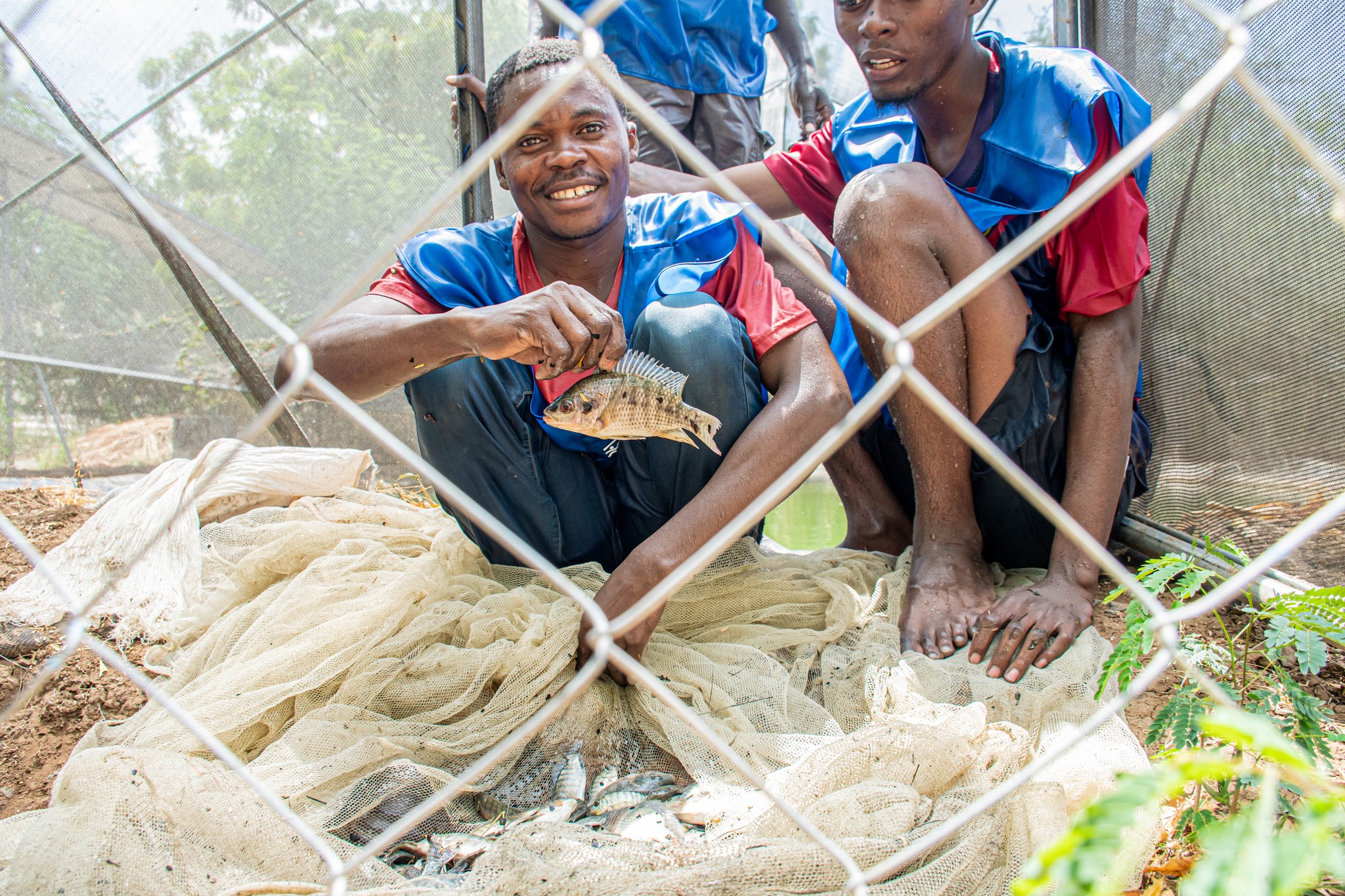
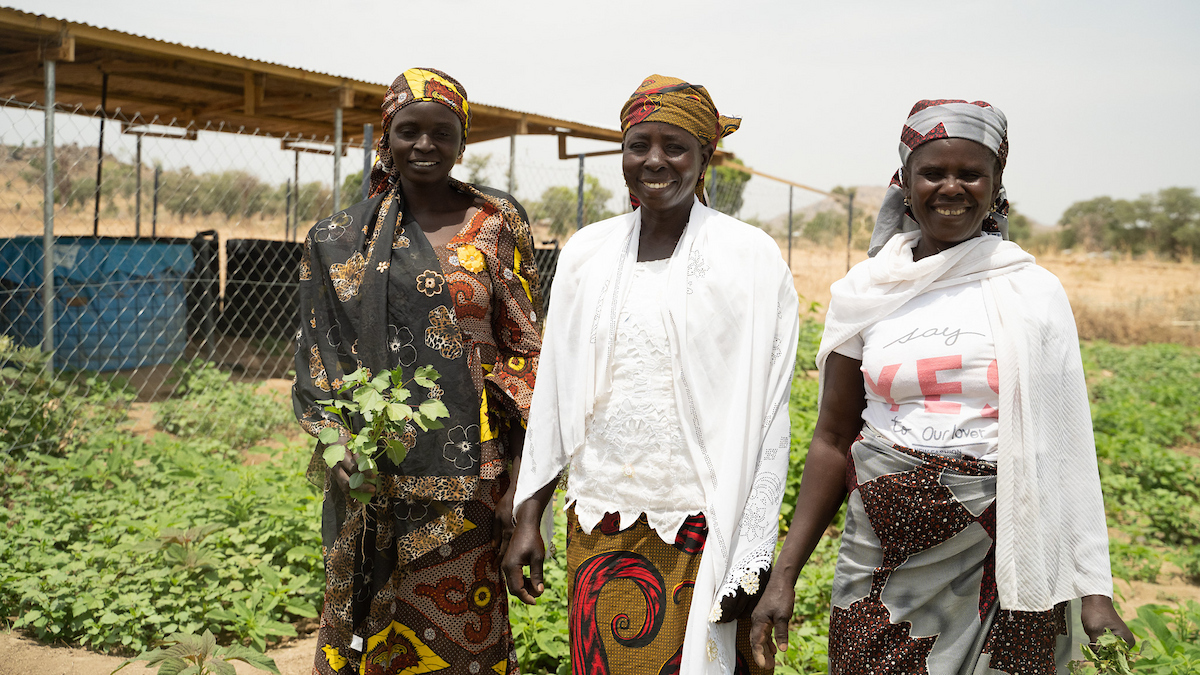
In Dilga, northern Cameroon, JRS-facilitated fishponds and vegetable gardens have become a lifeline for the local community. JRS worked with people to find a way to build a sustainable future and strengthen peace and social cohesion. For women like Assiam Djamba, the new vegetable gardens mean more than just fresh produce – they offer her financial independence. “When they installed the water for the fish farm, we took advantage of that. It’s with this water that we’re growing the garden. We’re happy to have it, because that’s how we make our money,” she says. She can now earn enough to buy essentials like soap and medicine, and send her children to school.
After participating in JRS-Konexio’s Digital Inclusion project, Charles’ life changed dramatically. As a top-rated freelancer on Upwork, he earns income consistently and has invested in essential tools for his work, including a personal computer and a Jabra headset. His income allows him to meet his own needs and support his family with food, clothing, and other essentials.
“Now I manage to eat three times a day, I have a daily plan as a freelancer, and I spend my time at JRS sharing the vibes with my colleagues,” he explains.
Charles’ success extends beyond his household. As his workload has grown, he has begun hiring skilled community members to help complete contracts, particularly for data management projects with Artificial Intelligence companies that require native local-language speakers. After client verification, he pays his collaborators, providing much needed income to other refugee families.
This ripple effect reflects one of the project’s core objectives: fostering self-reliance and community-level economic empowerment among refugees who are otherwise restricted from formal employment in Malawi.
From aid to agency
Refugee self-reliance is not just a job for an individual. It is the building of a community, where kids attend school, medicines are paid for, there is nutritious food on the table and the heads of the family use their God given talents for the betterment of everyone. Most importantly it restores people’s identity and enables them to answer their call in continuing God’s work of creation in our modern world.
Explore more