JRS, ICMC, Caritas & UNHCR mark 75 Years of the UN Refugee Convention in Rome
13 November 2026
In 1951, the world made a promise: that no one forced to flee would be left without protection.
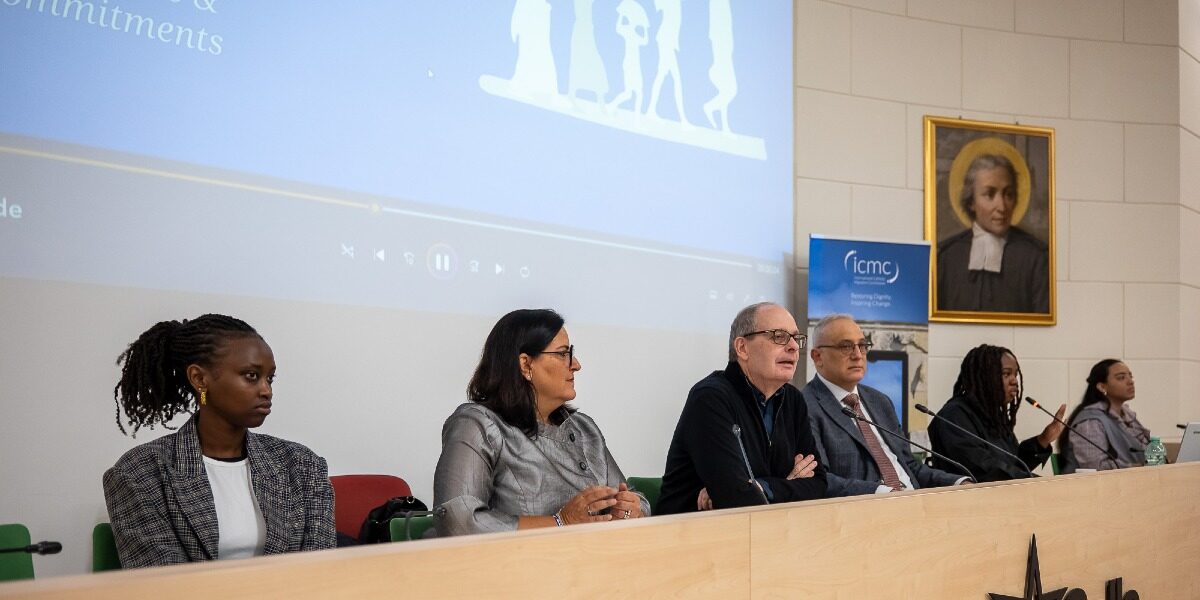
On 12 November in Rome, that promise was brought back to the centre of the conversation. The International Catholic Migration Commission (ICMC), Caritas Internationalis, JRS and the UN Refugee Agency (UNHCR) co-hosted ‘Celebrating 75 Years of the UN Refugee Convention: Faith Perspectives and Moral Commitments’, an event exploring how faith-based commitments to refugee protection can help uphold the Refugee Convention as a binding and effective global framework.
Today protection is under threat. For millions of people forced to flee their homes, seeking safety means closed borders, exclusion, and barriers to the most basic rights. The co-organisers were joined by refugee leaders, ecumenical and interreligious representatives, and the private sector to explore concrete ways to keep alive the promise made in 1951: to ensure protection, uphold human dignity and create the conditions for refugees to rebuild their lives and shape their futures.
Throughout the morning, participants heard contributions from Ms. Francesca Bonelli, UNHCR Representative to Italy, the Holy See, Malta and San Marino, Mr. Davide Bernocchi, Secretary General of ICMC, Dr. Victor Genina, Director of Integral Human Development, Caritas Internationalis, and Br Michael Schöpf SJ, JRS International Director.
Br Michael Schöpf SJ offered a reflection on the Convention as more than a legal instrument, “the Geneva Convention is more than a legal instrument and a founding document for UNHCR. It is a covenant and as such, the result of a deliberate decision: never again should anyone be without a safe haven; never again should anyone be without rights.” Speaking about the path forward, he added: “We are called to work for justice and for reconciliation. The call is evident both in countries stricken by war, which fuel forced displacement, and in the increasingly divided societies where refugees find themselves at the centre of polarised debate and politics. We are called to foster the creation of just and peaceful communities that seek the common good in the dignity, hope and flourishing of all and especially those who are most marginalised”
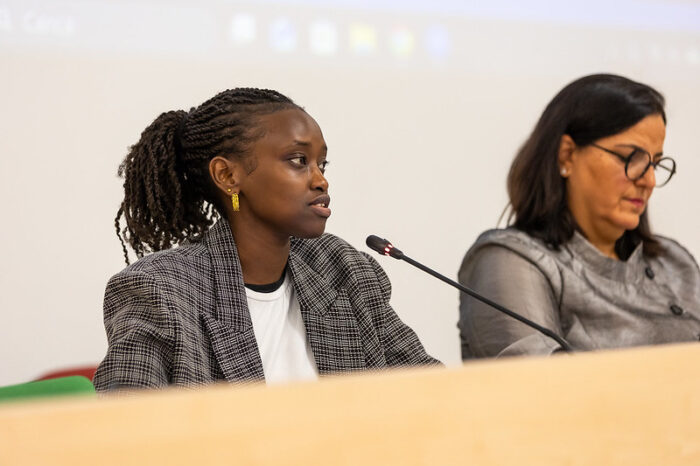
The event also featured the testimony of Benitha Nzayana Mugisha, Bocconi University graduate and UNICORE alumna, who shared her journey from displacement to completing higher education and pursuing professional opportunities in Italy. Reflecting on her experience, she said: “The Refugee Convention has a concrete meaning in my life. Its principles concern the very things my family and I needed: protection and the chance to rebuild. Finding safety and continuing my education showed me why these commitments matter. Their value is felt in the opportunities people have to shape their futures.”
JRS also contributed to the event’s advocacy discussions through the participation of Michel Anglade, JRS Representative in Geneva, who moderated the “Faith Perspectives panel”. Discussions explored how faith communities can help counter fear and exclusion, amplify refugee voices, and build support for policies rooted in dignity, justice, and international law.
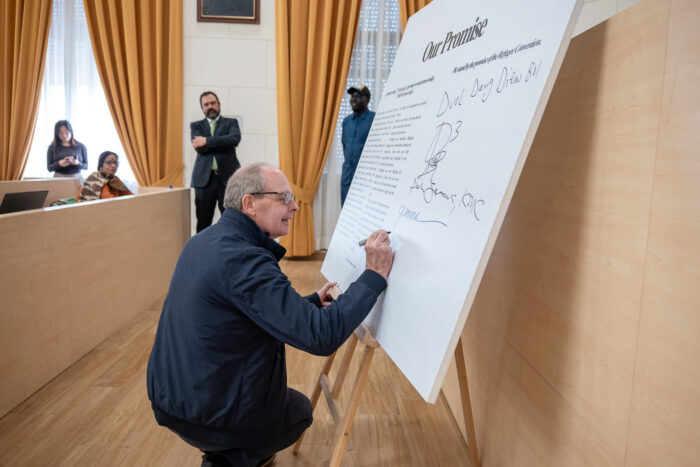
The gathering concluded with the formal signing of The Promise, UNHCR’s global statement of solidarity with refugees, launched in July 2026, by representatives of ICMC, Caritas Internationalis, JRS, and the University Corridors for Refugees (UNICORE) programme, represented by Duol Deng Diew Bol, South Sudanese refugee studying agriculture at the University of Foggia.
Explore more