From 30 September to 2 October, Rome hosted the conference Voices in Action: Transformative Collaboration and Educational Solidarity with Refugees & Migrants, organised by the Refugee & Migrant Education Network. The event brought together educators, researchers, and practitioners to explore innovative and collaborative approaches to the education of refugees and migrants. Among the speakers was John-Bosco, Head of Operations at JRS Australia, who shared his perspective on the situation of migrants in Australia and on the vital role of education in preparing a new generation of refugees to contribute to the development and growth of their communities.
Can you please introduce yourself?
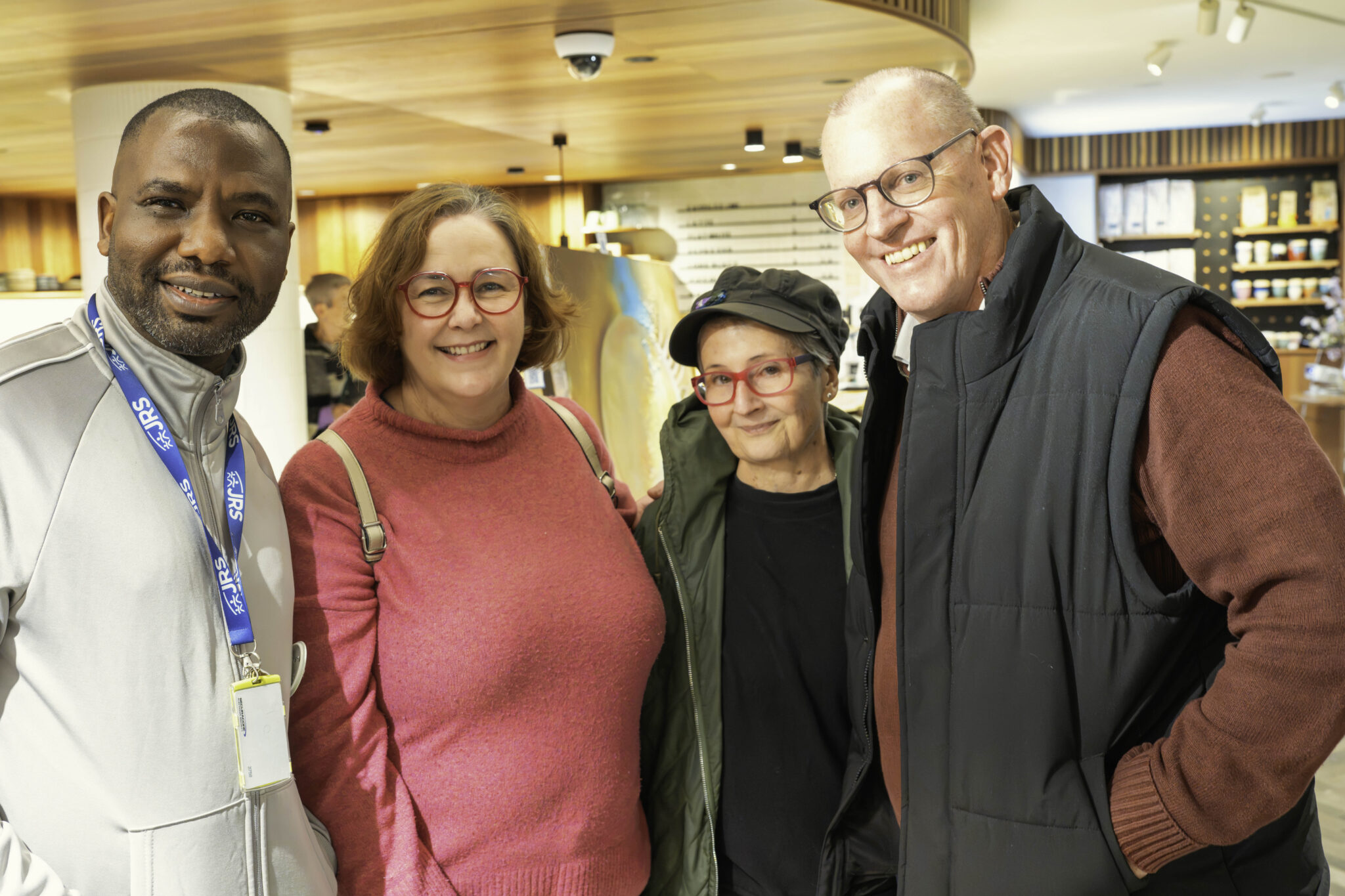
My name is John-Bosco Ngendakurio, and I was born in Burundi in the 1980s. As a result of the Burundian Civil War, in 1994 I fled my home country and found refuge in Tanzania. I lived there for several years before moving to Norway. I later relocated to Australia in 2010 to continue my studies, pursue a career and build a family. I currently work with JRS Australia as Head of Operations.
Can you tell us more about the local context where you work?
In Australia, I work primarily with people seeking asylum. My role involves providing various forms of support to those seeking protection in the country, although we also often accompany other vulnerable communities.
Historically, Australia has adopted restrictive migration policies aimed at discouraging or preventing new arrivals. As a result, people seeking asylum have become one of the most vulnerable groups in Australian society. In many respects, the Australian context is not very different from that of other Western countries when it comes to refugees and migrants.
Refugees, migrants, and especially people seeking asylum frequently become the target of political and media rhetoric. Many politicians see a tough stance on immigration as linked to electoral success. This tendency to strumentalise migration is not unique to Australia, it is part of a broader global trend.
This makes our work even more challenging. On one hand, we accompany the people we serve; on the other, we must address the difficulties and injustices created by structural problems within the system.
What are the main challenges for the people you serve?
There are both individual and structural challenges. I would begin with the individual ones.
We know the weight of forced displacement. Whether someone comes from a neighbouring country or from much farther away, such as Afghanistan, the journey to a country of refuge, in our case Australia, is often marked by violence, and hardship and distress.
One of the most common experiences among people forced to flee their homes is a profound sense of alienation. Many have endured persecution, physical and psychological torture, serious human rights violations, extreme poverty, and hunger. When they arrive in a host country, they carry all these experiences with them.
Even when people obtain legal status or permanent residency, the transition from survival to a flourishing life does not happen automatically. Rebuilding a stable life and developing a genuine sense of belonging can take many years, both because of what people have experienced before arriving and because of the challenges they face afterwards.
The issue of racism, for instance, it doesn’t make it easy for people to be a part of society, whether it’s really even belonging in the country. This is something many face throughout their lives, from childhood to university, and then, you understand in your time studying that you’re not going to get the job in accordance with your degree, qualification, credentials, because of your skin colour or accent, and the perceptions of who becomes “us” and who becomes the “other”. Unfortunately, many of the people we accompany find themselves in the latter category. As a result, some experience poverty not because of personal shortcomings, but because of social and structural barriers. The people we serve therefore face both individual challenges and systemic obstacles.
What are the biggest challenges you face in your work?
In terms of the challenges faced by us as humanitarian workers, there are some individual challenges, we have to look in the mirror and improve strategies and how to get things done.
However, many of the challenges we face stem from the context in which we operate.
On the one hand, we support people in understanding and exercising their rights and in participating meaningfully in society. On the other, we must work to change the systems and policies that prevent that participation. At JRS we support people so that they can live with dignity. But then how do you support someone to live with dignity if you have to give them food? Sometimes, we find ourselves confronting this contradiction. We want people to live dignified lives, but we can’t give them the work right, and without that work right, you can’t really fully participate.
Can you tell us about a particularly transformative encounter or event that continues to inspire you in your work?
One of the greatest rewards of my work is seeing people transform their lives. Despite the many challenges and needs I have described, we have countless stories of people who, in spite of enormous obstacles, have managed to build a future for themselves.
This is immensely rewarding both for me and for our staff. It is inspiring to witness how people’s lives can change for the better through the work we do. Our teams help people access services, enrol in school, pursue higher education, and go on to become professionals, lawyers, doctors and professionals in their field. And then, many give back to the society. I am a living example of this. As a young refugee in a camp in Tanzania, I benefited from JRS support. My own story demonstrates what can happen when humanitarian organisations are able to continue accompanying people: because when you support one person, then that person can support entire communities.
I have seen many people move from mere survival to living full and meaningful lives, finding their place in society and contributing to the common good.
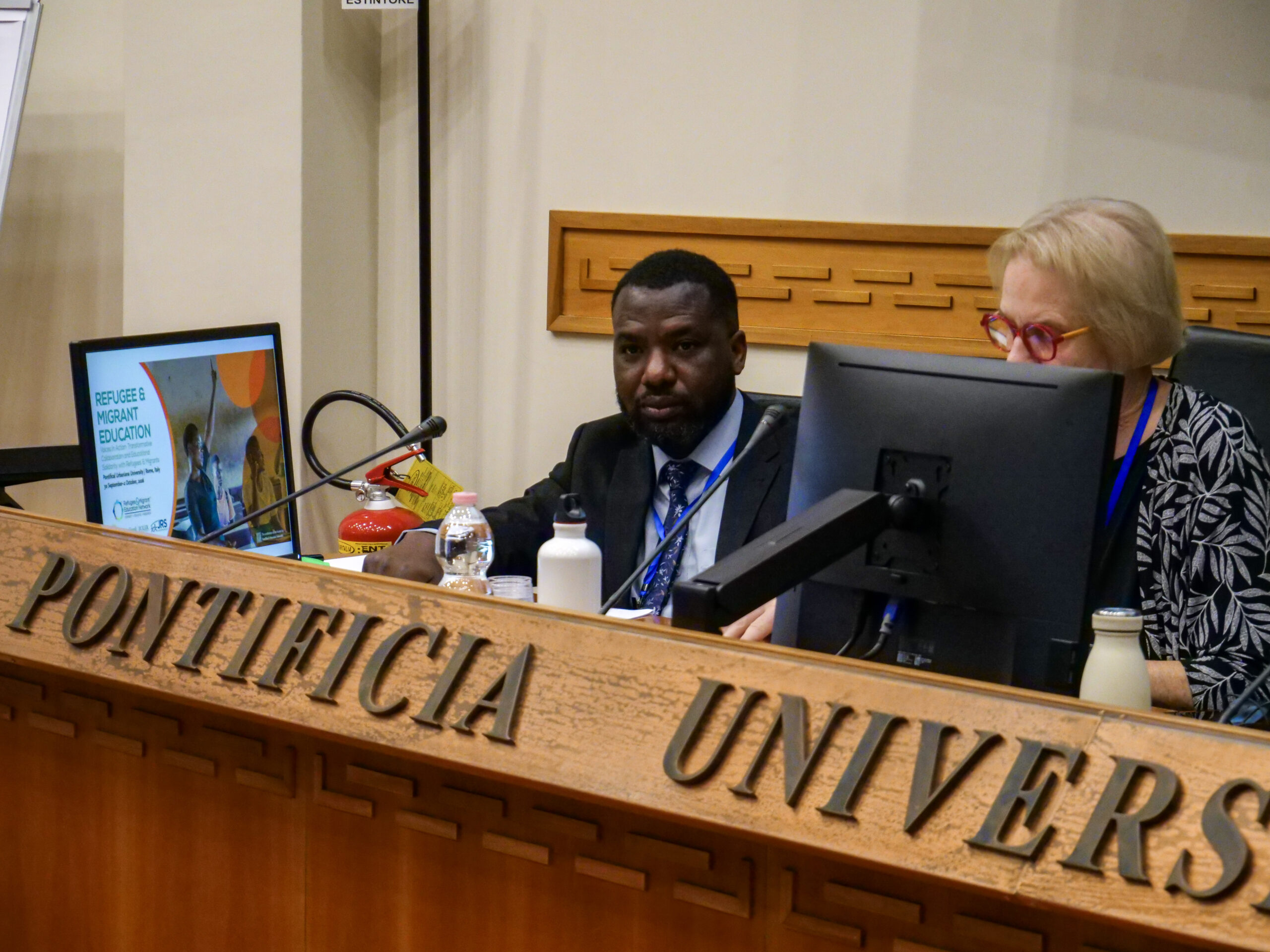
Last week you participated in the conference Voices in Action: Transformative Collaboration and Educational Solidarity with Refugees & Migrants. Why is this conference significant in your opinion? Why does it matter today?
Education is key. In the refugee context, it is not merely a key; it is breakthrough.
We often talk about giving people a voice. Yet there is no better way to do that than by giving people the confidence to speak for themselves. That confidence cannot be achieved without access to quality education. Education ensure people can speak for themselves and can tell their own stories in very good articulated manner, moving us away from being a voice for the voiceless and towards ensuring that people can speak in their own voice.
This conference helps identify effective strategies to strengthen education systems and expand opportunities for refugee students. We must ask ourselves how we can ensure that a person’s education is not interrupted by forced displacement. The goal is to help form well educated refugees who can go back and build and raise their communities to a higher level.
Explore more